


Maa Baglamukhi Yantra Pujan
Understand the sacred geometry, traditional worship, preparation, authenticity, and transparent consultation for Maa Baglamukhi Yantra Pujan at Nalkheda.
Yantra details, worship scope, materials, and dakshina are confirmed in consultation.
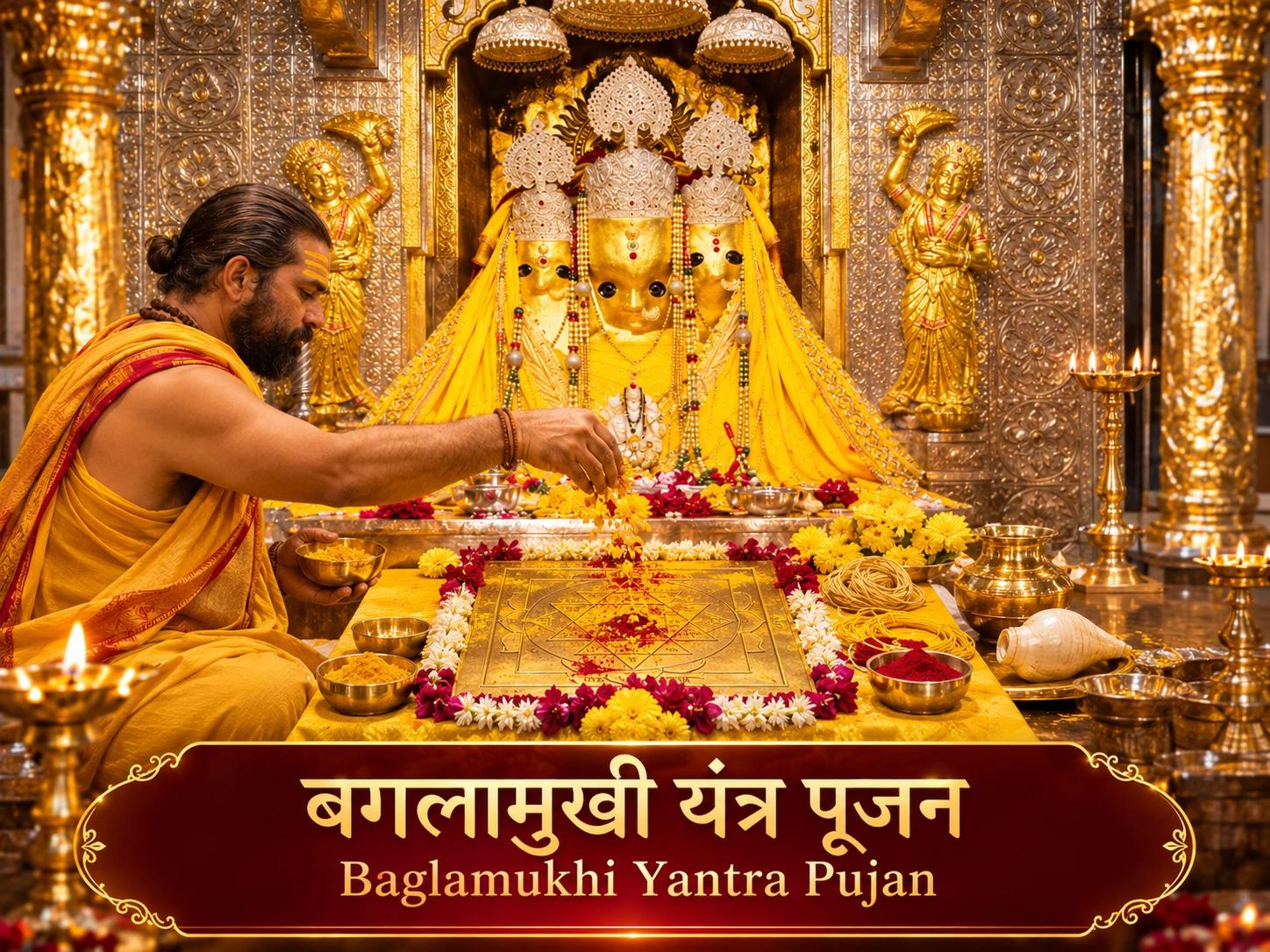
A Small Diagram, and a Surprisingly Large Question
A visitor may first notice the lines. The shape is compact: a carefully arranged pattern rather than a familiar photograph or statue. Someone beside them may call it a yantra, place flowers near it, or speak of it with the same reverence they would show an image of the Divine Mother. For a first-time visitor, the natural question is not, “How powerful is it?” It is simpler: “What am I looking at?”
That question deserves a patient answer. In several Hindu and especially Shakta and Tantric traditions, a yantra is a ritual diagram associated with a deity or a form of worship. Rather than depict the deity as a human-like figure, it uses a geometric arrangement as a focus of attention. Different traditions have different diagrams, and their interpretation is not something to settle by looking at a random shopping listing.
A yantra is therefore not an ordinary decorative logo. Nor is every object called “Baglamukhi Yantra” automatically part of the same lineage or method. Its religious meaning depends on the tradition, the design, and the way it is used in worship. If you have seen many conflicting designs online, that uncertainty is a good reason to ask questions rather than buy the first one with a dramatic promise.
Why Devotees Associate a Yantra with Maa Baglamukhi
Maa Baglamukhi is counted among the ten Mahavidyas in Shakta traditions. Devotional literature often associates Her with Stambhana, a Sanskrit term commonly explained through ideas of restraint, stilling or stopping. Popular descriptions sometimes sensationalize this as the ability to silence opponents or reverse any adverse situation. A careful reading makes room for history and symbolism without turning those descriptions into a guaranteed service claim.
For many devotees, the meaningful, approachable part of this tradition is the hope of becoming steadier amid conflict: less easily provoked by a harsh word, less distracted by fear, and more deliberate in speech and action. A yantra can serve as a religious focus during prayer and contemplation. It cannot establish whether an accusation is true, alter a court ruling, change someone’s consent, or make an unsafe situation safe.
What Does “Yantra Pujan” Actually Mean?
Pujan means worship or an act of reverential offering. Yantra Pujan, in broad terms, refers to worship conducted with a yantra as an important sacred focus. Depending on the tradition, it may include a sankalp (an expression of prayerful intention), offerings of flowers or other materials, recitation, and guidance from a practitioner. Those are examples of practices encountered in worship traditions—not a guaranteed list of inclusions for this particular Nalkheda service.
The sacred diagram serves as the focal point for meditation, contemplation, and respectful offering.
Purchasing an engraved metal plate is distinct from engaging an officiant to conduct formal worship.
Pran Pratishtha is a separate ritual tradition. Confirm whether consecration is included or separately arranged.
The Quiet Role of Symbols in a Very Busy Life
Consider someone whose day begins with messages and ends with more messages. Even during prayer, the mind runs ahead: a pending interview, a difficult meeting, a conversation that went badly, an elderly parent’s appointment. A sacred symbol gives attention somewhere to rest, at least for the minutes a person has set aside for devotion.
This is one way to understand the yantra without pretending to explain every part of its geometry. In traditional practice, the arrangement has religious significance; in personal experience, the act of pausing and approaching worship intentionally may matter too. The distinction between religious meaning and a person’s subjective experience should remain clear.
You do not need to claim that triangles “emit a frequency”, that a diagram will “neutralize negative energy”, or that keeping one in a wallet will change your finances. These marketing expressions are not required to respect the tradition. A more meaningful question is whether the worship is properly explained and whether you feel able to participate sincerely.
What Devotees Usually Hope to Bring into Prayer
Rather than treating Yantra Pujan as a magical cure-all, consider the realistic devotional contexts:
Prayer can be meaningful alongside open conversations, respectful boundaries, and family counselling. Ritual does not magically transform another person’s behavior.
For courtroom anxiety, consult a qualified lawyer and submit timely evidence. Devotion supports inner composure; it does not dictate judicial verdicts.
Seekers pray for clarity and steadiness during volatile business periods. Prudent financial planning and hard work remain non-negotiable.
Many devotees install a yantra on home altars simply to anchor daily meditation, silence, and reverent connection to Maa Baglamukhi.
At Nalkheda: First Confirm the Worship Arrangement
The Maa Baglamukhi temple at Nalkheda is an established pilgrimage destination in Agar Malwa district. The district administration places it beside the Lakhundar River and points visitors to the temple’s own official website for official information. That provides the geographic context; it does not verify that every service advertised by an independent platform has been approved by the temple.
Ask where the worship takes place, who conducts it, and whether advance permission or registration is required.
There is no verified fixed duration. Inquire about the planned sequence and approximate time needed for your visit.
Yantra Pujan, Pran Pratishtha and Bringing an Object Home
These expressions are frequently bundled together in online advertisements. They should not be treated as synonyms:
A ritual diagram or sacred geometric representation within the relevant tradition.
Worship conducted with the yantra as its devotional focus.
A separate religious term used for rites of installation or consecration. Whether appropriate or included for a particular yantra is a question for the practitioner.
Ownership of a physical object. It does not by itself prove material authenticity, prior worship, or future outcomes.
How to Care for a Yantra at Home (Respect Without Superstitious Fear)
There is no single universal rule that this page should prescribe for every household. If you receive a physical yantra, first establish what it is and who provided it. Ask the practitioner for guidance consistent with your family’s tradition. Keep the object respectfully and safely; avoid damaging it with harsh chemicals, and keep sharp items away from small children.
Be cautious of claims that one placement direction is mandatory for everyone, that touching the object renders it ineffective, or that forgetting a daily recitation will invite misfortune. Such statements generate anxiety without basis. Authentic devotional practice invites peace, not guilt.
Which Approved Puja is Actually the Best Fit for Your Question?
A good adviser should be able to tell you when Yantra Pujan is not the most relevant topic. Use this comparison table to navigate the catalogue:
| Devotional Intent | More Relevant Offering | Why |
|---|---|---|
| Worship of sacred geometric representation | Maa Baglamukhi Yantra Pujan | Directly addresses the meaning and worship of the yantra. |
| Broad family prayer or simple worship | Puja & Special Archana | General devotional worship is the clearer enquiry. |
| Chanting and devotional repetition | Maa Baglamukhi Mantra Jaap | Focuses on recitation rather than a physical diagram. |
| 1,25,000 extended recitation | Sawa Lakh Mantra Anushthan | An extended jaap is distinct; do not imply inclusion. |
| Sacred fire worship with samagri | Maa Baglamukhi Havan | Different liturgical focus; not automatically part of Yantra Pujan. |
| Devotional concerns for legal dispute | Court Case Victory Puja | Addresses legal concerns directly without outcome guarantee. |
| Interpersonal conflict / opposition | Shatru Badha Nivaran Puja | Separate approved ritual with dedicated guidance. |
Before You Pay, Ask for Clarity in Writing
Itemized Quotation & Trust Separation
A short, clear quotation is more valuable than a dramatic promise. It should state: the exact service, the organiser’s identity, the proposed date and venue, who supplies materials, whether a physical yantra is included, what the devotee receives, any actual third-party or temple fees, refund/rescheduling terms, and an appropriate contact route.
No yantra, prayer or ceremony can guarantee a job offer, court judgement, election result, debt settlement, medical recovery or the behaviour of another person. If those are your immediate concerns, practical support remains important alongside faith.
Ask About Yantra Pujan Arrangements
If you are exploring Maa Baglamukhi Yantra Pujan at Nalkheda, begin with three questions: What does this symbol represent in the tradition being followed? What exactly will the proposed worship include? And what, if anything, am I expected to take home or continue afterward?
No published experiences for this observance yet. If you participated, sign in to share an honest account. A login proves your account, not attendance; verified participation is marked only after a completed booking is independently matched.
Researched Inquiries & Frequently Asked Questions
A Maa Baglamukhi Yantra is a sacred geometric representation associated with worship of the Goddess in relevant Shakta/Tantric traditions. Its design and meaning should be identified through a reliable practitioner or source, not assumed from an online advertisement.
Experiences Shared by Devotees
Authentic reflections shared by devotees who performed or participated in Maa Baglamukhi Yantra Pujan.
Be the First Devotee to Share Your Experience
No reviews have been published for this ritual yet. TIRTH YATRA strictly shows genuine user submissions and never manufactures ratings.
Agamic Sources & Related Offerings
Plan Your Sacred Ceremony with Verified Acharyas
Receive traditional guidance from verified Nalkheda purohits. Clarify auspicious muhurta, samagri, and participation arrangements with complete transparency.