


Maa Baglamukhi Havan
There is something quietly absorbing about sitting before a ceremonial fire. Learn the meaning, preparation, and practical arrangement of Maa Baglamukhi Havan.
Ritual scope, participation, timing, fees and venue are confirmed before any arrangement is made.
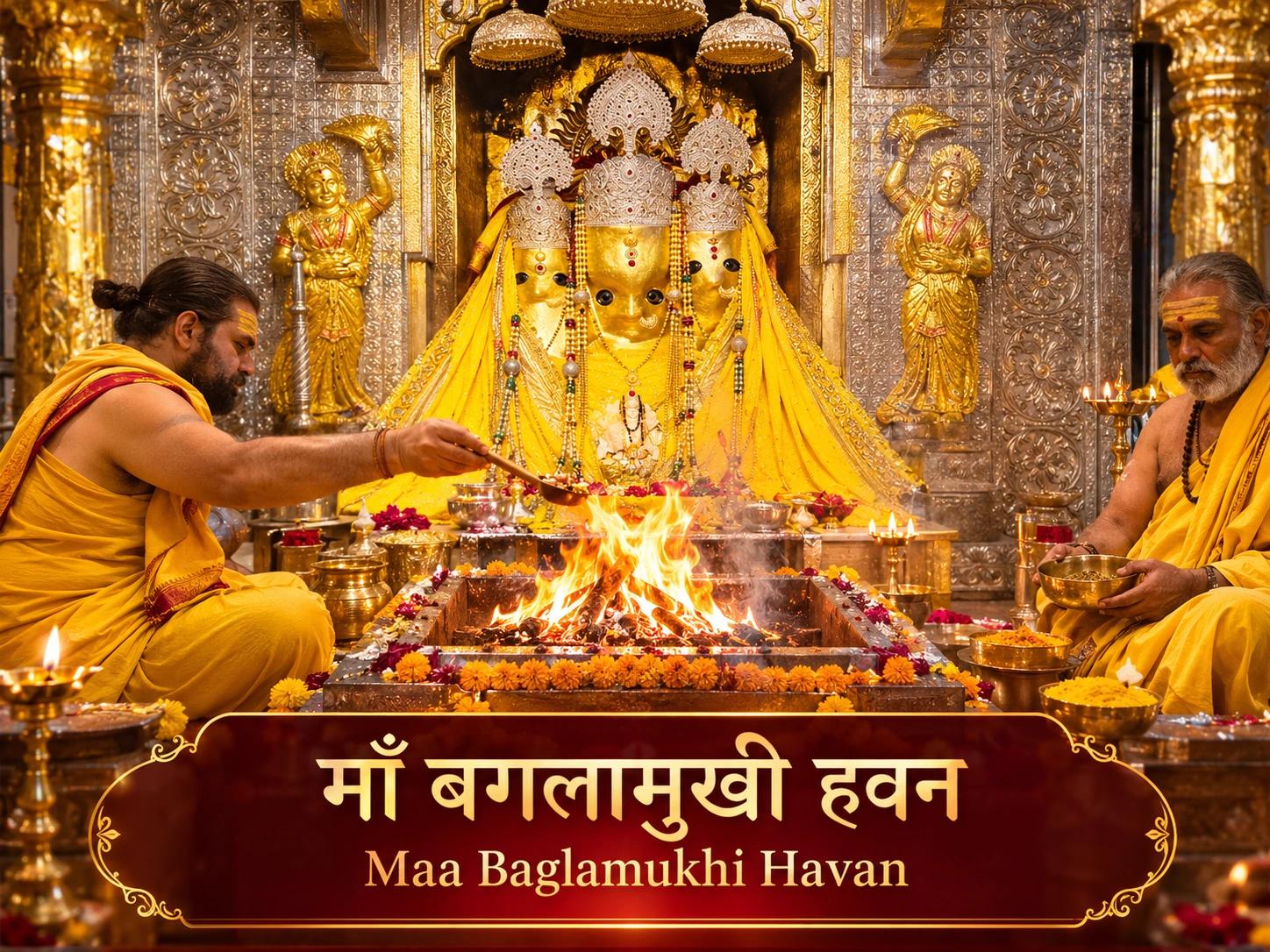
A Prayer Made in the Presence of Fire
People arrive at Nalkheda for different reasons. Some have come for darshan after hearing about Maa Baglamukhi from their family. Others are carrying a worry they have not found easy to explain. There may be a business decision on their mind, a tense relationship at home, or simply a wish to mark a new beginning with prayer. The temple experience is not identical for all of them, and it should not be sold as though one ritual is the answer to every concern.
For many devotees, a Havan offers a particular way to pray. Unlike simply standing for darshan, the observance takes place around a prepared sacred fire. An officiating priest leads the prayers; offerings are made at appropriate moments; the person requesting the worship may be invited to participate according to the local custom. The fire gives the ceremony its visible centre, but what makes it meaningful to a devotee is attention, intention and reverence.
Maa Baglamukhi is revered in Shakta traditions and is associated in devotional interpretation with stambhana—often explained as stilling or restraining harmful speech, turmoil or opposition. That symbolism should be approached with care. It is not a promise that a person can control another person's actions, obtain a court judgment or make a difficult situation disappear. The prayer may be meaningful without being presented as a substitute for practical responsibility.
What Does Maa Baglamukhi Havan Mean?
The word Havan commonly refers to a form of fire worship in which offerings are placed into a prepared flame while prayers or mantras are recited. You may also hear the word homa. The two words are often used in overlapping ways, although different traditions can have different ritual conventions.
In Maa Baglamukhi worship, the Havan is understood within the wider devotional world of the Goddess. It is one way devotees express a sankalp—an intention offered in prayer. The details are never as simple as a fixed checklist copied from the internet. A priest may follow a particular lineage, and the materials and recitations can vary. Visitors should be able to ask what is being arranged without feeling embarrassed for not knowing ritual terminology.
Why Nalkheda Matters to Devotees
Nalkheda is in Madhya Pradesh's Agar Malwa district. The district administration identifies the Maa Baglamukhi temple on the banks of the Lakhundar River and directs visitors to the temple's listed website for Havan-related information. That geographical setting is useful to know if you are planning an in-person visit, but it does not by itself confirm where your particular Havan will take place.
The temple is associated with religious stories and long-standing devotional traditions. It is perfectly reasonable to recount those as local beliefs, provided the wording makes clear they are traditions rather than documented historical events. A respectful guide should tell visitors what is known, what is believed, and what still needs confirmation.
You may see references online to a “201-kund complex” or mandatory committee tokens. Treat them as matters to confirm with the current authorized temple administration. This page does not independently verify a kund count or a ₹350 government/committee fee. If a charge is quoted, request its purpose, payer, payee, current amount and receipt terms before you agree.
When Someone May Wish to Enquire
A stressful few months can make a person search for an anchor. A family disagreement or work setback may lead someone toward prayer in a structured setting alongside practical steps.
Not every Havan begins with a problem. Sometimes a family wishes to mark an occasion with devotion or express gratitude. A good consultation begins with that simple intention.
Devotional imagery is sometimes discussed around opposition. In everyday life, the wisest steps around conflict remain practical: document incidents, seek advice, and establish boundaries.
A shorter prayer may suit Puja & Special Archana. Specific turmeric offerings belong to Haldi Havan; prolonged mantra recitation belongs to Mantra Jaap. They are not interchangeable.
What an Arrangement May Involve
The following describes the kinds of stages a visitor might encounter in Hindu fire worship. It is not a guaranteed Nalkheda sequence; a qualified practitioner must confirm the actual service scope.
Before the Ceremony (Consultation & Scope)
The devotee describes their intention, preferred date, participants, and any accessibility or smoke sensitivity concerns. The officiant explains the scope.
Preparation and Sankalp
Purification and a formal sankalp spoken for the devotee or family. If gotra is unknown, the officiant handles it customarily without inventing details.
Invocation and Fire Offerings
The sacred fire is prepared. Prayers are recited and offerings made under guidance. Devotees should not handle fire without direction.
Completion & Blessings
A concluding offering, closing prayers or prasad distribution according to the agreed service. Ask what is included before the day.
What Should You Ask About Samagri?
Samagri means the materials used in worship. Depending on the specific ritual tradition, these may include offerings such as ghee, grains, fragrant substances, flowers or other items. A detail page should not declare a mandatory quantity or a fixed ingredient bundle without evidence from the actual provider. Nor should a general Havan quietly inherit the unusual ingredients of Haldi Havan or Mirchi Havan.
Before confirming, ask: Who arranges the materials? Are they included in the quotation? Are there restrictions on what may be offered? Will incense or smoke be substantial?
This is especially important for visitors with asthma, respiratory sensitivity, children, and older relatives. Where smoke or fire may pose a health risk, visitors should be able to sit at a comfortable distance or participate through quiet prayer without exposure. Do not treat ritual smoke as clinical treatment.
Baglamukhi Havan, Puja, Haldi Havan and Mirchi Havan — the Difference
A person should not be pushed into a more specialized offering merely because it sounds stronger. An honest adviser should be willing to explain why a simple form of worship may be sufficient for the devotee’s intention.
| If you are seeking... | Consider enquiring about... | Nature & Location |
|---|---|---|
| General Vedic fire offering & prayer | Maa Baglamukhi Havan (This Page) | Lakhundar Riverfront Yajnashala |
| Quiet personal/family flower archana | Maa Baglamukhi Puja & Special Archana | Temple Prangan / Sabhamandap |
| Turmeric-centered symbolism & offerings | Maa Baglamukhi Haldi Havan | Riverfront Stone Kund |
| Specialized chili-fire tradition with strict safety | Maa Baglamukhi Mirchi Havan | Designated Outdoor Venue |
A Practical Visit to Nalkheda
If you are travelling to the temple, confirm the following practical details before departure:
Confirm Authorized Venue
Main temple area, riverfront pavillion, or designated space? Never assume access to restricted sanctums.
Timing & Duration
Ask how long to set aside, whether seating is available, and whether elder companions can comfortably attend.
Itemized Fee Breakdown
Ask for a breakdown separating materials, priest dakshina, and any temple counter receipts.
Receipts & Cancellation Policy
Insist on legitimate receipts and clarify rescheduling or refund rules before transferring payment.
The Day After the Havan
A ceremonial experience can feel important without changing the world overnight. A devotee may want to remember the prayer, spend a little time in reflection, or continue ordinary family worship. There is no responsible reason to pressure someone into another paid ritual because a hoped-for result did not occur immediately.
If the original concern was a legal dispute, continue with qualified legal advice. If it was a health issue, continue medical care. If it was financial stress, make a realistic plan and seek appropriate help. Devotion and practical action can sit alongside each other without being confused for the same thing.
Arrangements, Pricing & Honest Consultation
Have a question about Maa Baglamukhi Havan? Ask about the actual ritual, date, participation and full cost before making a decision. There is no obligation to book simply because you enquired.
Researched Inquiries & Frequently Asked Questions
It is a form of devotional fire worship associated with Maa Baglamukhi. Prayers and offerings are made in a prepared sacred fire under the guidance of an officiant. The exact mantras, materials and procedure depend on the tradition and the arrangement you are considering; this page does not promise a single universal sequence.
Experiences Shared by Devotees
Authentic reflections shared by devotees who performed or participated in Maa Baglamukhi Havan.
Be the First Devotee to Share Your Experience
No reviews have been published for this ritual yet. TIRTH YATRA strictly shows genuine user submissions and never manufactures ratings.
Agamic Sources & Related Offerings
Plan Your Sacred Ceremony with Verified Acharyas
Receive traditional guidance from verified Nalkheda purohits. Clarify auspicious muhurta, samagri, and participation arrangements with complete transparency.