


Maa Baglamukhi Puja & Special Archana
Not every visit begins with an elaborate fire ritual. Learn how Puja, Archana and Sankalp are understood—and what to ask before making an arrangement.
Participation, timing, offerings and fees are confirmed before a request is accepted.
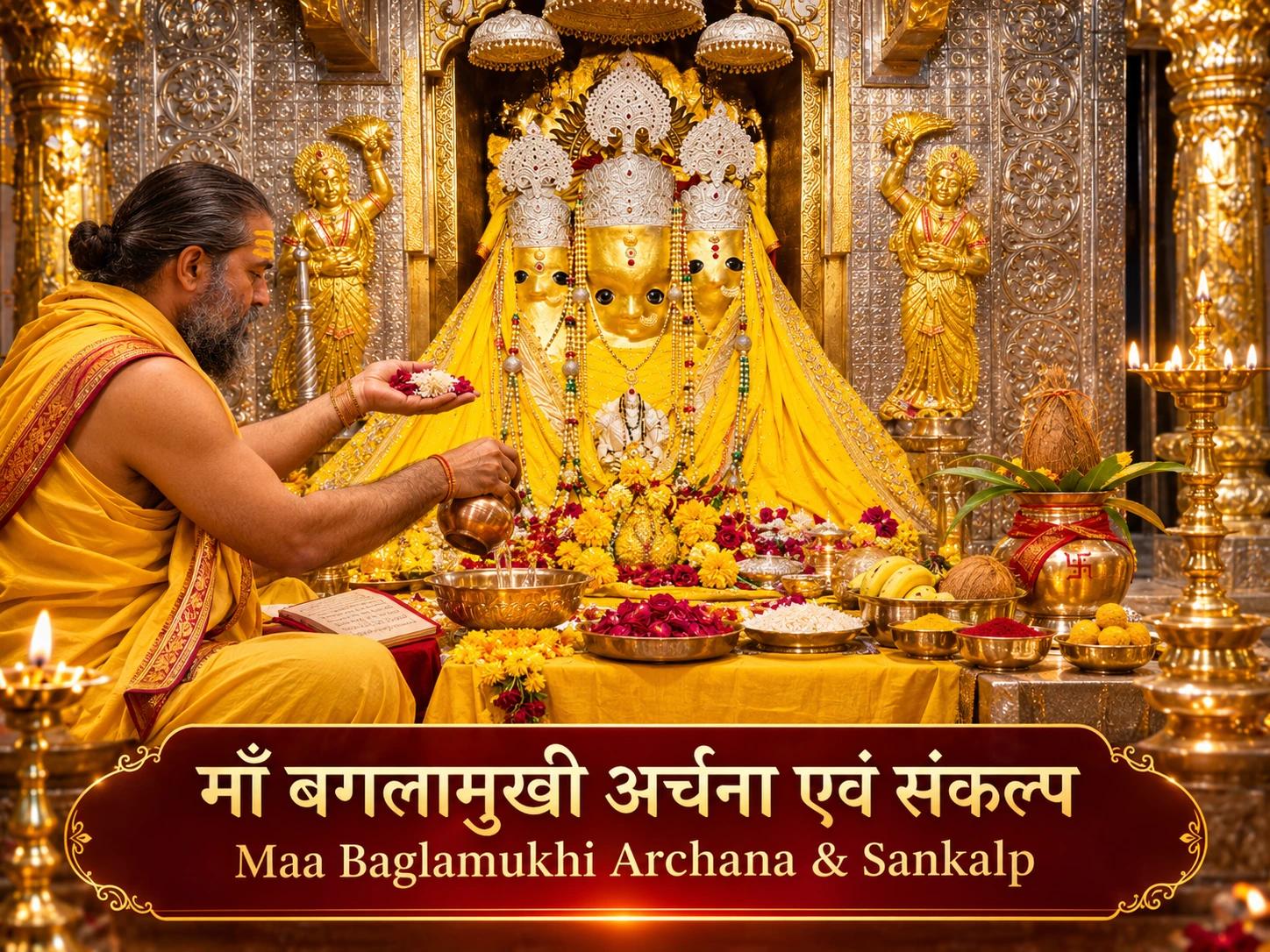
A Visit Can Begin with a Simple Prayer
A family may come to Nalkheda carrying several concerns at once. Someone is hoping for steadiness in a difficult year. Someone else has brought their parents for darshan. Another person simply wants to say thank you after a long-awaited visit. These are different stories, but all of them may begin in much the same way: a moment of prayer before Maa Baglamukhi.
That is why it helps to understand the difference between darshan, puja, archana and sankalp before choosing any arrangement. You do not need to know every Sanskrit term in advance. What matters is that you understand what is being requested in your name, which offerings are involved, and what participation is actually possible at the temple.
Maa Baglamukhi Puja & Special Archana is the foundational worship offering in this TIRTH YATRA catalogue. It is for readers who want to understand a focused devotional observance rather than assume that a more elaborate fire ritual is automatically necessary.
What Is Puja? What Is Archana?
Puja is a broad word for worship expressed through prayer, offerings and reverence. It encompasses traditional gestures of devotion.
Archana usually places special emphasis on offering flowers or other approved items while the deity’s names or prayers are recited.
A devotee may ask for an archana as part of personal worship, family prayer, or an occasion important to them. That does not necessarily mean a long multi-day ceremony. Nor does it mean that everyone must purchase a separate package to pray at a temple.
Why the Sixteen Offerings Are Often Mentioned
You may hear the term Shodashopachara Puja. It simply refers to worship expressed through sixteen acts of welcome and reverence. A helpful comparison is the care shown to a respected guest: welcoming them, offering a seat and water, presenting flowers or fragrance, offering light, and sharing food with respect. In worship, these gestures become symbolic offerings to the deity.
The count is familiar, but there is no single universal step-by-step sequence used in every temple. Different communities and ritual manuals describe the details differently. Research into Shodashopachara documents this wider tradition; it does not establish the exact procedure of every Nalkheda service.
If an arrangement is described as sixteen-step worship, the provider should explain the actual steps being offered, the location, who performs them, and whether devotees are present or represented through a sankalp. Never assume inner sanctum entry or Panchamrit abhishek without confirmed local permissions.
What Does a Sankalp Mean?
A sankalp is the intention or resolve expressed at the beginning of worship. In a personal or family arrangement, the officiating priest may ask whose name the prayers are for and what the devotee wishes to pray about. Depending on the custom, they may ask for a gotra, family details or place of residence.
The point of a sankalp is not to turn a private worry into a public announcement. If your concern is sensitive, ask what information is genuinely necessary, who will see it, and whether you can describe it in a simple and private way.
Say so plainly. A knowledgeable practitioner should explain the convention followed in that situation. Do not invent an identity or feel pressured to share unnecessary private information.
When Devotees Enquire About This Worship
Some families wish to pray together before a new chapter, while travelling with elders, or after a difficult period. Archana offers a familiar form of collective devotion.
When work, studies or personal decisions feel unsettled, a person may seek a quiet opportunity to reflect and pray for clarity alongside practical actions.
A birthday, anniversary, first temple visit or personal milestone can be a reason for gratitude. Ask whether the requested date and worship can be accommodated.
Some visitors prefer a simple archana rather than a lengthy ceremonial arrangement. Asking about available options beforehand helps avoid confusion.
A devotee may wish to include a loved one’s name in prayers. Do not assume remote participation, live video or prasad delivery is available; obtain a clear, documented confirmation first.
What a Visitor Might Encounter During an Archana
Every actual arrangement must be confirmed locally. At a broad level, a devotee may encounter the following elements:
Before the Worship (Preparation & Sankalp)
The practitioner may clarify names for sankalp, explain permitted offerings, and advise on timing. Mention accessibility and waiting-time needs for elders.
During Worship (Prayers & Offerings)
Prayers and names of Maa Baglamukhi may be recited while flowers, light or other permitted items are offered. This is an overview, not an absolute guarantee of every ritual step.
Afterward (Aarti & Prasad Guidance)
Depending on actual temple practice, the devotee may receive prasad or have questions answered. Ask in advance what is included.
Archana and Havan: An Important Difference
These two forms of worship are related but not identical. Archana generally centers on prayer and offerings such as flowers and light. Havan involves offerings placed into a ritual fire while prayers are recited.
| If you are seeking... | Consider enquiring about... | Nature & Location |
|---|---|---|
| Personal or family prayer with flower offerings | Maa Baglamukhi Puja & Special Archana (This Page) | Temple Prangan / Inner Mandap |
| Fire offering with traditional ghee & samagri | Maa Baglamukhi Havan | Lakhundar Riverfront Yajnashala |
| Fire ritual centered on turmeric symbolism | Maa Baglamukhi Haldi Havan | Riverfront Stone Kund |
| Extended mantra recitation & spiritual focus | Maa Baglamukhi Mantra Jaap | Parikrama & Jaap Mandap |
Preparation: Five Questions Worth Asking
Before a visit or enquiry, ask the provider these five clarifying questions:
What exactly is included?
A basic archana, a longer puja, a sankalp, or a combination?
Where will it take place?
General temple area, a designated space, or another location? Never assume restricted sanctum access.
What should I bring?
Flowers, a written name, clothing requirements or nothing beyond what is supplied?
How are timing & fees confirmed?
Ask for a clear breakdown separating any independently payable temple amount from service fees.
What if my plans change?
Understand rescheduling, refunds, crowded days and weather availability before confirming payment.
Belief, Prayer and Realistic Expectations
In the devotional world, Maa Baglamukhi is associated by many worshippers with the stilling of harmful speech, courage and protection. People may bring concerns involving disputes, uncertainty, study, work or family relations. Such associations belong to the sphere of faith and interpretation; they are not reliable predictions about legal judgments, health outcomes, election results or financial success.
If someone is facing harassment, a court matter, illness or debt, prayer may be part of their personal support system, but appropriate professional guidance and practical action remain important.
Before You Decide
Tell us the occasion, your preferred date and any questions you have. We can explain what information is needed and which arrangements are actually available. There is no obligation to book simply because you enquired.
Researched Inquiries & Frequently Asked Questions
It is a devotional worship arrangement centered on prayers and offerings to Maa Baglamukhi. In this catalogue, it is the general Puja/Archana offering. The actual steps and inclusions must be confirmed before scheduling.
Experiences Shared by Devotees
Authentic reflections shared by devotees who performed or participated in Maa Baglamukhi Puja & Special Archana.
Be the First Devotee to Share Your Experience
No reviews have been published for this ritual yet. TIRTH YATRA strictly shows genuine user submissions and never manufactures ratings.
Agamic Sources & Related Offerings
Plan Your Sacred Ceremony with Verified Acharyas
Receive traditional guidance from verified Nalkheda purohits. Clarify auspicious muhurta, samagri, and participation arrangements with complete transparency.