

Check temple hours before your visit.
ॐकावेरिकानर्मदयोः पवित्रे समागमे सज्जनतारणाय । सदैवमान्धातृपुरे वसन्तमोङ्कारमीशं शिवमेकमीडे ॥
One of the 12 JyotirlingasMandhata Island · NarmadaDarshan: 05:00 AM – 10:30 PM

श्री ओंकारेश्वर ज्योतिर्लिंग, मध्य प्रदेश

Shri Omkareshwar Jyotirlinga, Madhya Pradesh

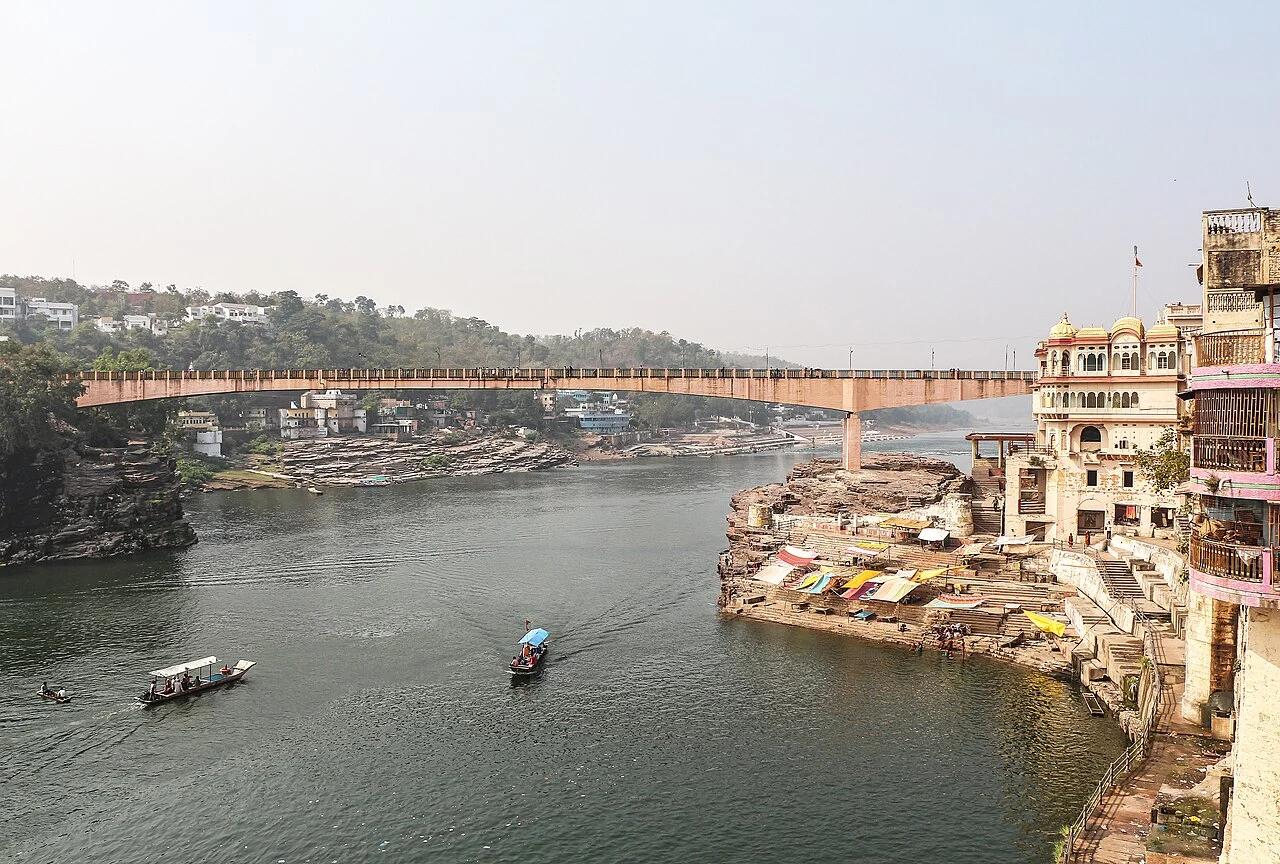
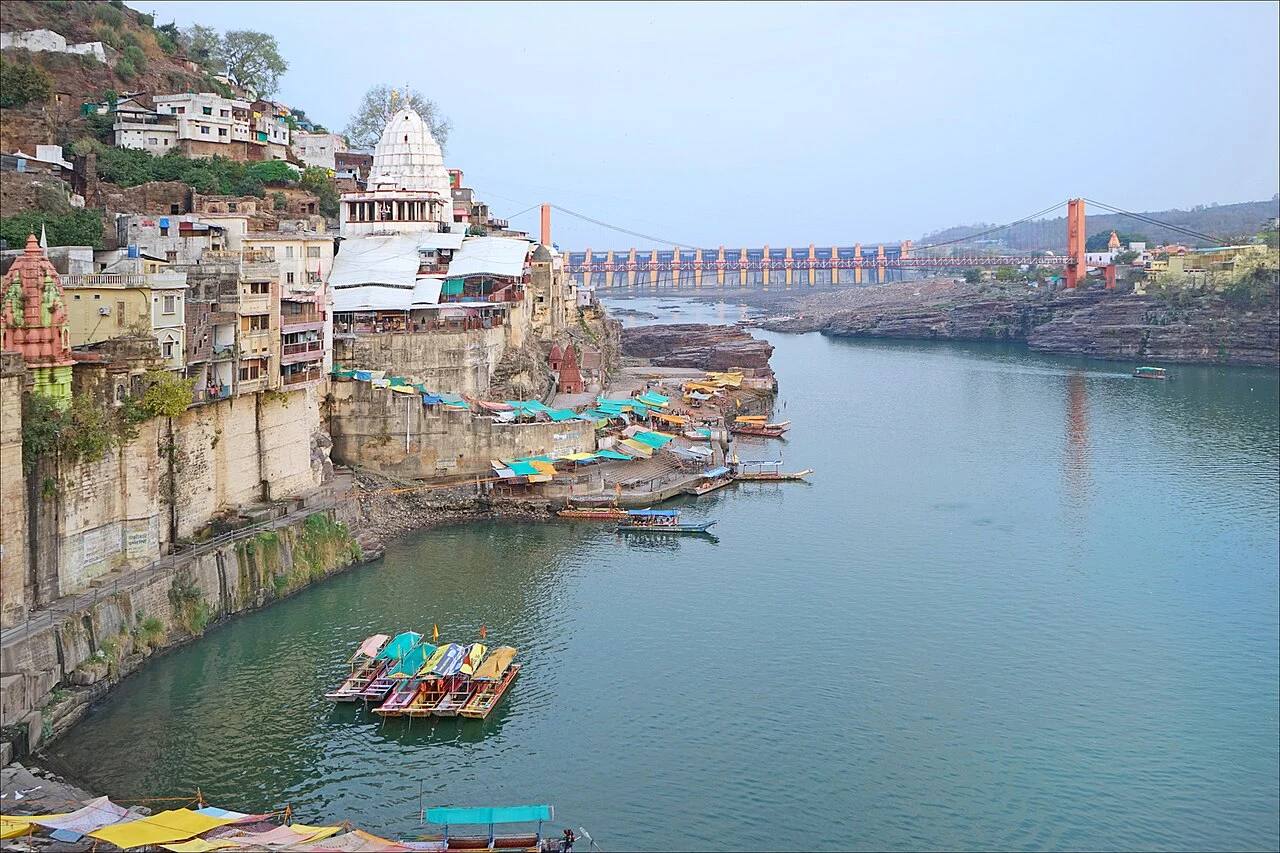
Shri Omkareshwar Jyotirlinga overlooking River Narmada and Mandhata bridge
Mandhata Island & Narmada
Khandwa, MP

Nestled on Mandhata Island carved by the sacred Narmada River, Omkareshwar and mainland Mamleshwar form an inseparable twin-shrine pilgrimage. Plan darshan hours, bridge crossings, Mandhata Parikrama, and regional transit.

For festival schedule changes & ₹300 slots, verify via:shriomkareshwar.org

Essential Pilgrim Briefing

Omkareshwar Quick Visitor Essentials

Four practical island realities to confirm before crossing the Narmada bridges onto Mandhata Island.

Trust Verified
05:00 AM – 10:30 PM

Verified Sanctum Hours

Open 05:00 AM – 10:30 PM daily (Mangal Aarti at 04:30 AM). Closes briefly for Madhyanha Bhog (12:20–01:15 PM) & Sayam Shringar (04:00–04:30 PM), before 09:30 PM Chaupad Shayan Aarti.

Verified Protocol
Twin Jyotirlinga Circuit

Mandhata + Mamleshwar

The two shrines sit ~450 m apart across the Narmada. Cross via Mamleshwar Setu (Old Bridge) or the New Suspension Bridge on foot; four-wheelers stop on the South Mainland.

Verified Protocol
Trust Authorised

General & ₹300 Shighra Pass

General public darshan is 100% free. During peak weekends, Mondays, or Shravan, official ₹300 Shighra Darshan wristbands/slots are issued only by Shri Omkareshwar Mandir Trust.

Verified Protocol
Mainland Prep

Cloakrooms & River Safety

Store heavy luggage & electronics safely on the South Mainland before crossing the footbridges. Always board regulated ghats/boats wearing life-jackets and heed dam sirens.

Verified Protocol
Divine Panchang · Navamsha VerifiedIST (UTC+05:30)

Today's Panchang — Shri Omkareshwar Jyotirlinga Mandir

Omkareshwar, Madhya Pradesh (22.246° N, 76.151° E)

19 Nov 2026
Essential Darshan & Aarti Schedule

Daily Darshan Timings & Aarti Schedule

Regular daily sanctum darshan runs from 05:00 AM to 10:30 PM, pausing briefly during Mangal, Madhyanha Bhog, evening Shringar, and Shayan rituals.

Confirm at shriomkareshwar.org
04:30 AM – 05:00 AM

Mangal Aarti & Dawn Bhog

Early dawn sanctum awakening and Naivedya bhog. General public darshan opens immediately afterward at 05:00 AM.

Sanctum Paused for Public
05:00 AM – 12:20 PM

Mangal Darshan & Narmada Jalabhishek

Primary morning window for Jyotirlinga darshan, bilva patra offerings, and holy Narmada water jalabhishek.

Open for Darshan
12:20 PM – 01:15 PM

Madhyanha Bhog & Naivedya Break

Noon Rajbhog ritual inside the garbhagriha; public queue pauses temporarily until 01:15 PM.

Temporarily Closed (~55 min)
04:30 PM – 09:30 PM

Shringar Darshan

Evening decorated darshan period coinciding with dusk lamp lighting across the Narmada ghats.

Open for Darshan
09:30 PM – 10:00 PM

Shayan Shringar & Chaupad Ritual

Traditional closing ritual where priests arrange a silk bed and Chaupad board in reverence to Lord Shiva and Parvati.

Nightly Sacred Tradition
Extended or modified festival schedules apply on Maha Shivratri, Shravan Mondays, and Amavasya.
Living Devotional Tradition · 09:30 PM

The Shayan Aarti & Nightly Chaupad Tradition

During the 09:30 PM–10:00 PM Shayan Aarti, priests traditionally lay out a ceremonial bed and Chaupad dice board inside the sanctum—a centuries-old devotional custom revered as Lord Shiva and Goddess Parvati’s nightly abode.

09:30 PM
Shayan Aarti Starts
Temple Entry & Official Access Guidance

General Darshan, Official ₹300 Shighra Pass & Visitor Preparation

Official ₹300 Shighra Darshan passes are issued solely by Shri Omkareshwar Mandir Trust (shriomkareshwar.org / designated counters). Tirth Yatra does not issue temple passes.
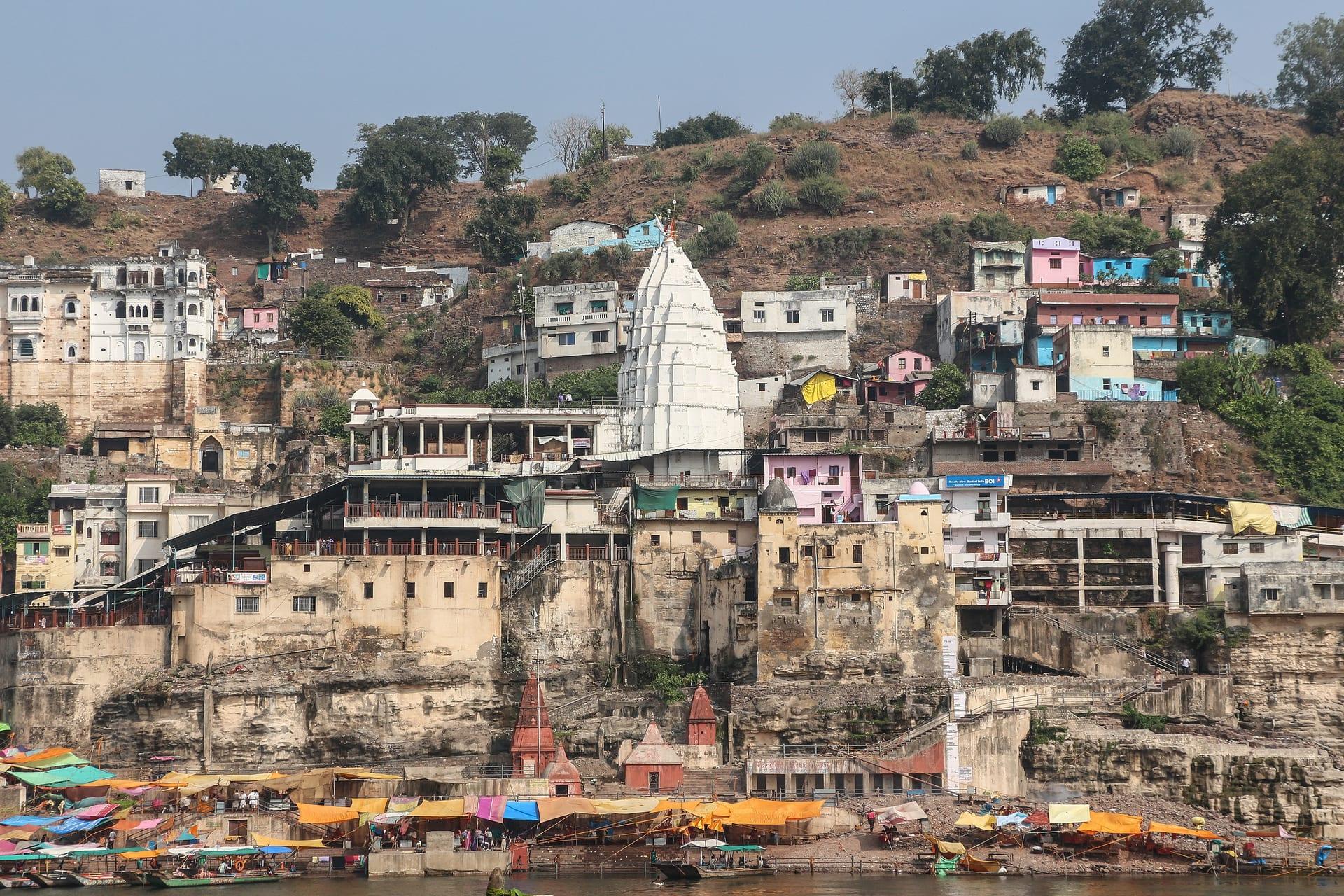
Mandhata island hillside view leading up to Shri Omkareshwar Temple
Public Entry • No Ticket NeededFree Entry

General Sanctum Darshan Queue

05:00 AM – 10:30 PM (excl. Bhog/Shringar breaks)

Standard queue across the pedestrian bridge into Mandhata hill sanctum. Waiting duration varies widely between weekdays and Shravan Mondays or Somvati Amavasya.

  • No advance online pass required for standard darshan.
  • Footwear, large bags, and restricted electronics must be left at mainland cloakrooms.
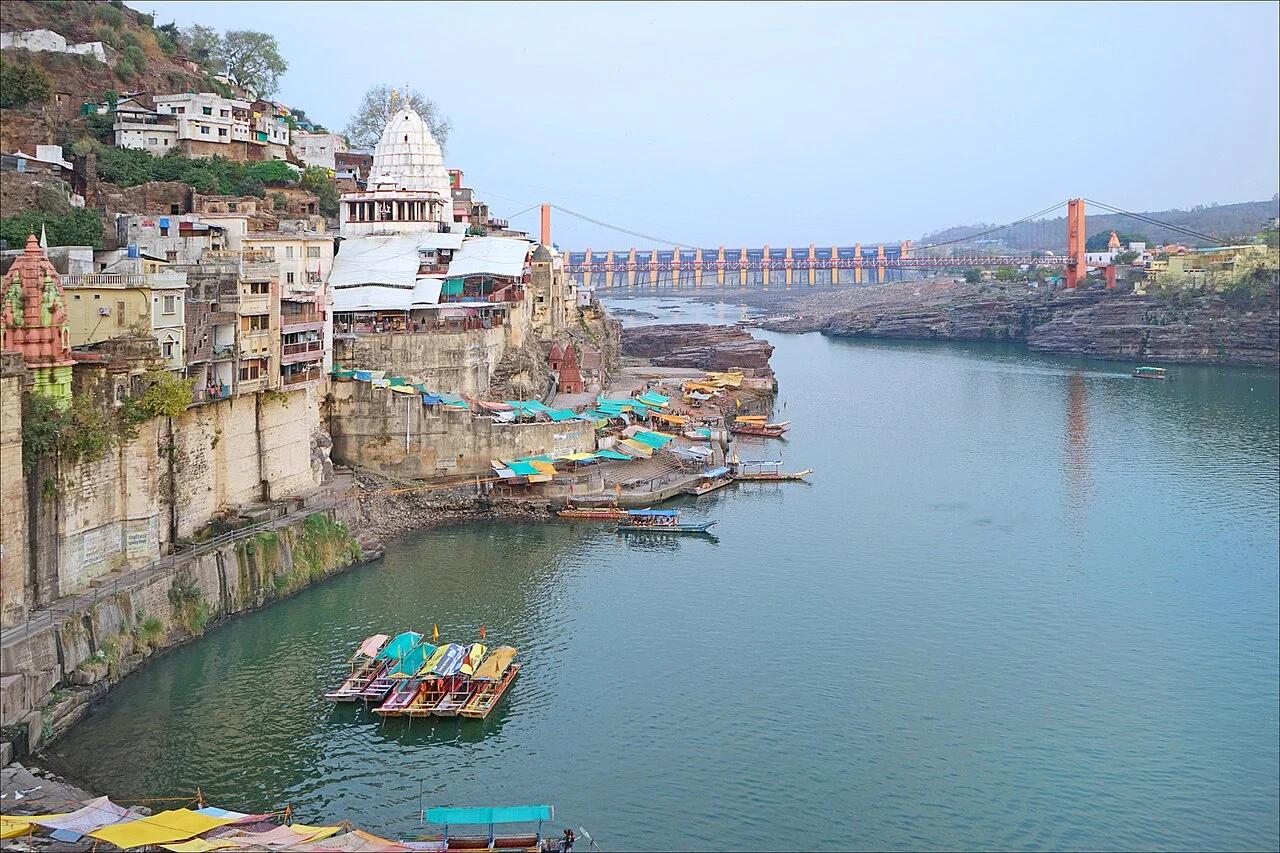
View of Shri Omkareshwar hill sanctum and Narmada bridge corridor
Advance Slot • Official Trust Only₹300 / Person (Official Trust)

Official Shighra Darshan Pass

Time-slot blocks between 07:00 AM – 08:00 PM

Expedited corridor entry administered exclusively by Shri Omkareshwar Mandir Trust to help visitors manage peak festival queues within booked time windows.

  • Book exclusively via official Trust portal (shriomkareshwar.org) or designated counters; single use within chosen slot.
  • Valid photo ID / Aadhaar required; entry wristbands are collected at designated mainland points (such as Bramhapuri Parking Center).
  • Trust advisories recommend crossing by road/footbridges rather than boats to avoid missing your slot.
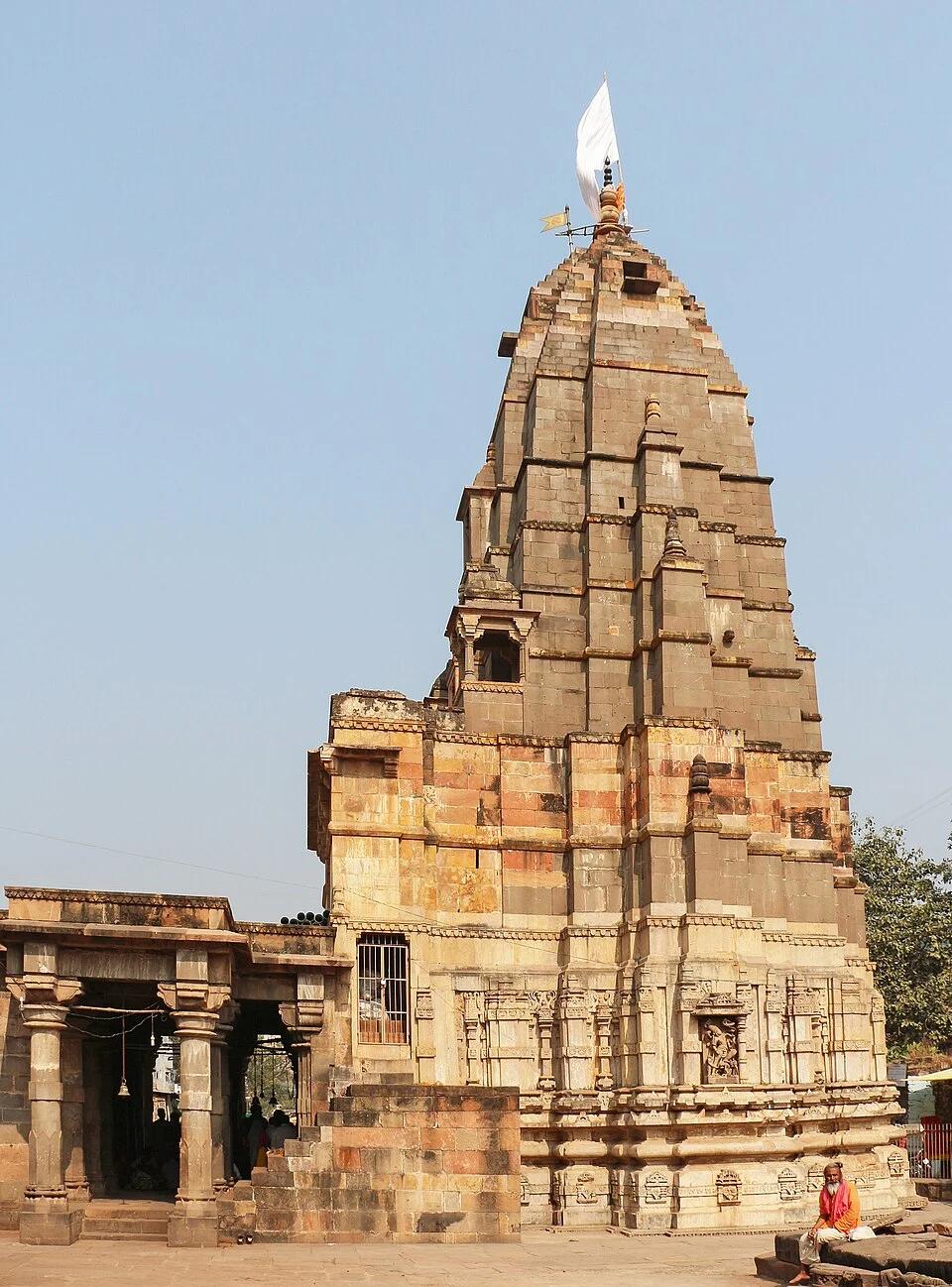
Shri Mamleshwar stone shikhara and carved pillared mandapa on the south bank
Dual-Shrine CompletionFree Public Entry

Shri Mamleshwar (Amaleshwar) South Bank Visit

Dawn to Evening (verify festival updates locally)

Located ~450m across the footbridge on the southern Narmada bank. Traditionally venerated alongside Omkareshwar to complete the dual Jyotirlinga pilgrimage.

  • Generally calmer queue flow; hosts the historic daily Maha Lingarchan tradition.
  • Protected medieval stone structure with carved columns and Sanskrit inscriptions.
Footwear & Mainland Cloakrooms

Deposit heavy bags and footwear at mainland cloakrooms before crossing the suspension bridges to Mandhata Island.

Attire & Jalabhishek Conduct

Dress modestly in traditional or clean attire suitable for temple worship; follow priest instructions inside the garbhagriha queue.

Steps & Senior Mobility Note

Even after using the riverfront terrace lift, expect internal stone steps inside the hillside sanctum; local doli porters assist seniors.

Vedic Rites & Pilgrim WorshipVerified Liturgy

Sacred Pujas, Abhishek & Narmada Ritual Guide

Authentic scriptural liturgy, duration, venue, and devotee coordination for holy Narmada Jalabhishek, Partheshwar Lingarchan, Deepdan, and Vedic Dosh Shanti at Shri Omkareshwar & Mamleshwar.

Pilgrim Liturgy Helpline
Official Mandir Trust Visitor PassNot a Vedic Puja
Statutory Fee: ₹300 per person

Shighra Darshan (₹300 Official Trust Pass)

Official Shri Omkareshwar Mandir Trust fast-track pass (₹300) providing direct, expedited corridor access to the island sanctum, reducing waiting time from 3–4 hours down to 30–45 minutes.

25–45 Mins•Venue: Mainland Trust Counter & Suspension Bridge Gate
Shri Omkareshwar Jyotirlinga Sanctum Narmada Jalabhishek and River Panorama
Abhishek & Jal Puja

Consecration of the sacred Omkareshwar Jyotirlinga using pure freshly drawn Narmada river water, panchamrit, bilva leaves and Shukla Yajurvedic Rudra mantras.

DURATION

45–60 Mins

Sanctum Jalabhishek / Priest Dakshina

₹500 – ₹1,100*

Traditional Dhoti/Kurta for men; Saree for women inside sanctum.
View Puja Details & Book
Showing 1 – 6 of 8 sacred offerings

Tirth Yatra operates as an independent devotee platform; statutory temple passes are issued directly by Shri Omkareshwar Mandir Trust. We coordinate traditional Vedic purohits and riverside liturgy.

Omkareshwar & Mamleshwar

Omkareshwar & Mamleshwar — Completing the Twin-Shrine Pilgrimage

Many first-time visitors walk across only to the island shrine and leave unaware of the south-bank sanctum. Both sites are essential to Omkareshwar’s traditional Jyotirlinga worship.

Scriptural Tradition · Shiva Purana (Kotirudra Samhita)

“एका मूर्तिर्द्विधा जाता ओंकारे परमेश्वरे । ओंकारश्च तथैवात्र अमलेश्वर उदाहृतः ॥”

Meaning: The one supreme effulgence took two complementary forms—Omkareshwar on Mandhata Island and Amaleshwar (Mamleshwar) on the southern bank.

Shri Omkareshwar Temple white spire rising above Mandhata Island waterfront
Step 1 · North Mandhata IslandShri Omkareshwar Trust

Shri Omkareshwar Jyotirlinga

  • Setting & Approach: Crossed via pedestrian footbridges from the southern shore onto Mandhata Island hill.
  • Sanctum Tradition: Houses the naturally contoured Swayambhu lingam in the sanctum pool and the 09:30 PM Chaupad Shayan ritual.
  • Documented Hours: 05:00 AM – 10:30 PM daily (excl. Mangala, Madhyanha & Shringar breaks).
Protected stone shikhara and mandapa of Shri Mamleshwar Temple on southern bank
Step 2 · South Mainland BankASI Protected Heritage

Shri Mamleshwar (Amaleshwar)

  • Location & Proximity: Sits on the south bank near mainland transport (~450 m / 8–10 min walk back across Mamleshwar Setu).
  • Documented Epigraphy: Carved stone pillars and inscribed wall slabs preserving verses of the Shiva Mahimna Stotra.
  • Daily Ritual Heritage: Calm stone courtyard where hereditary priests conduct daily earthen lingarchan supported since Holkar rule.
Practical Visiting Sequence: Take Narmada aachaman/snan → Cross footbridge to Shri Omkareshwar → Walk back across to venerate Shri Mamleshwar.
~450m Bridge Link
Sacred Narmada & Mandhata Island

Mandhata Island Topography, Bridges & Ghat Map

Formed where the Narmada divides into northern and southern channels around Mandhata hill—tap any landmark below to see how bridges, island shrines, and mainland Mamleshwar align.

North Channel: Kaveri BranchRiver Flow: East → WestSouth Channel: Main Narmada
South Mainland Bank (Bus Stand, Parking & Stays)Mandhata Island (Pedestrian Zone)1234567
Mandhata Island (South Slope)Island Jyotirlinga

Shri Omkareshwar Sanctum

Terraced stone shrine above Koti Teerth Ghat housing the natural water-washed Swayambhu lingam.

Select a Sacred Landmark:
Parikrama Routes & River Crossings

7.2 km Mandhata Parikrama, Footbridges & River Crossings

Understand the distinct local Mandhata circuit vs the broader Narmada Parikrama, terrain realities, footbridge crossings, and river safety alerts.

Local Island Circumambulation

Mandhata Island Parikrama (~7.2 km Loop)

A single-day ~7.2 km loop around Mandhata hill (roughly 2.5–3.5 hours at a moderate pace). Expect paved paths interspersed with uneven stone steps and hill inclines—start early morning and assess mobility honestly.

Broader Sacred Tradition (Distinct)

Full Narmada River Parikrama (Long-Distance)

Distinct from the 7.2 km island loop, the full Narmada Parikrama traces both banks of the river from source to sea and back—requiring extensive multi-month walking or structured regional travel.

Terrain & Difficulty

Includes stone stairs and ridge climbs across Mandhata hill—not wheelchair accessible. Start early morning to avoid afternoon heat.

Water & Shade

Carry your own drinking water and sun protection; refreshments and rest points cluster around Siddhnath and main ghats.

Practical Precaution

Use sturdy walking grip; keep bags secured against local monkeys along hillside trails.

010.0 km (Start)

Koti Teerth & Main Ghat Steps

Traditional starting point along the southern riverfront below Omkareshwar Mandir.

02~1.2 km

Gauri Somnath Temple

Ancient hilltop shrine revered for its massive black stone Shivling and Nandi pavilion.

03~3.5 km (Hill Ridge)

Siddhnath Plateau Temple

13th-century Paramara stone monument featuring carved columns along the elevated trail.

04~4.8 km

Western Narmada–Kaveri Confluence (Sangam)

Scenic western tip of Mandhata Island where the divided river channels reunite.

057.2 km (Finish)

Rinmukteshwar & Return to Bridge

Devotees offer gram (chana dal) at Rinmukteshwar before returning via the footbridge to Mamleshwar.

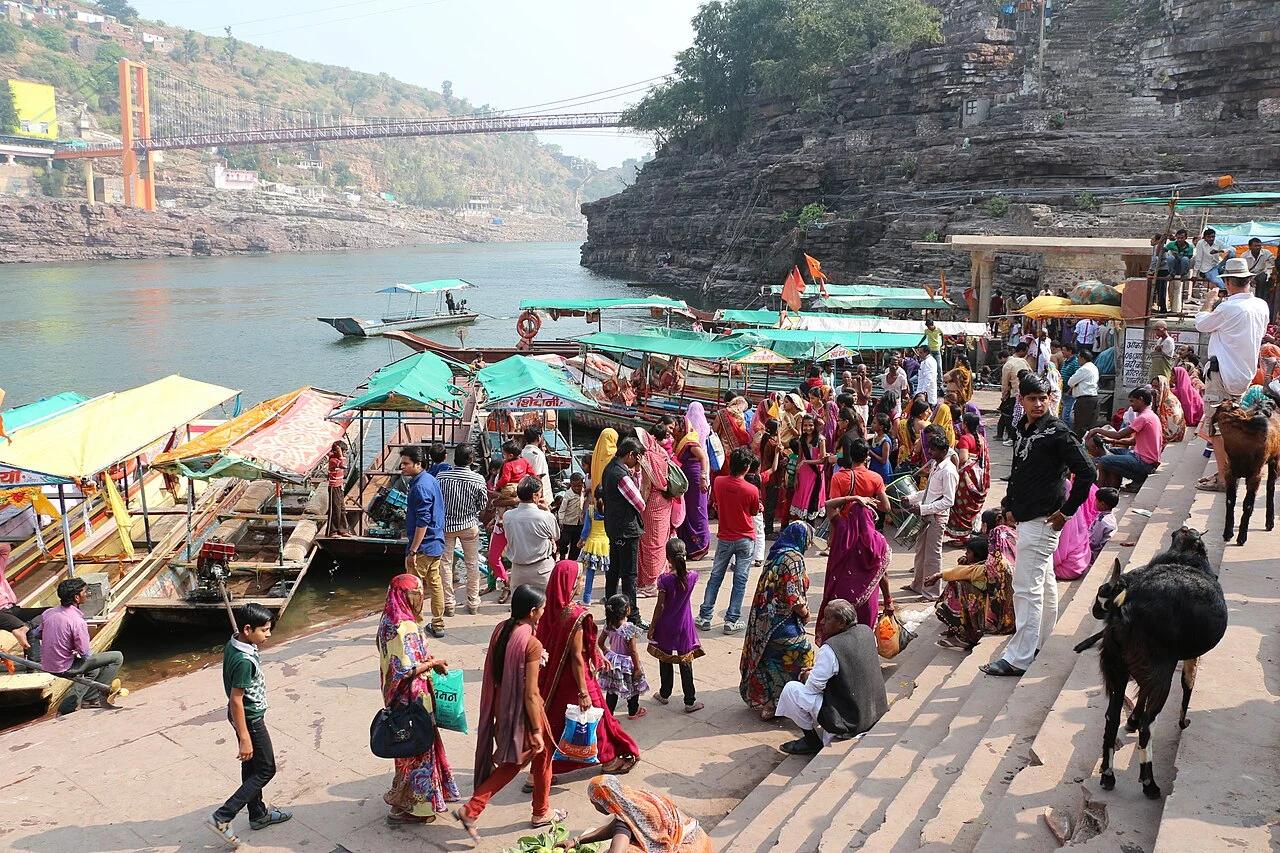
Moored boats along Gomukh Ghat steps below the Omkareshwar suspension bridge
Pedestrian Footbridges

Mamleshwar Setu and the newer suspension footbridge connect the south bank to Mandhata Island in ~5–8 minutes on foot; authorities regulate one-way crowd flow during major festivals.

Dam Siren & River Safety

Never step beyond safety chains at ghats. Whenever warning sirens sound ahead of upstream Omkareshwar Dam water release, vacate riverbanks and boats immediately.

Riverfront Safety Directive:Wear provided life jackets on every boat crossing; boat operations suspend after dusk or during high water discharge.

Documented History & Sacred Tradition

Omkareshwar Through the Centuries

Between Ancient Stone Epigraphs and Living River Devotion

Omkareshwar’s enduring spiritual identity rests on two distinct foundations that careful travellers appreciate seeing clearly separated: ancient Puranic-Shankara devotional traditions on one hand, and surviving medieval stonework, Sanskrit inscriptions, and Holkar-era civic endowments on the other.

Physically, Mandhata Island rises from the rocky Vindhya gorge where the Narmada divides into two channels—forming a natural bend often likened by pilgrims to the sacred syllable ॐ. While Puranic texts such as the Shiva Purana’s Kotirudra Samhita celebrate the single Jyotirlinga manifesting across both Omkareshwar (Mandhata hill) and Amaleshwar/Mamleshwar (south bank), surviving structural remains on the ground belong largely to the medieval Paramara artistic efflorescence between roughly the 10th and 13th centuries CE.

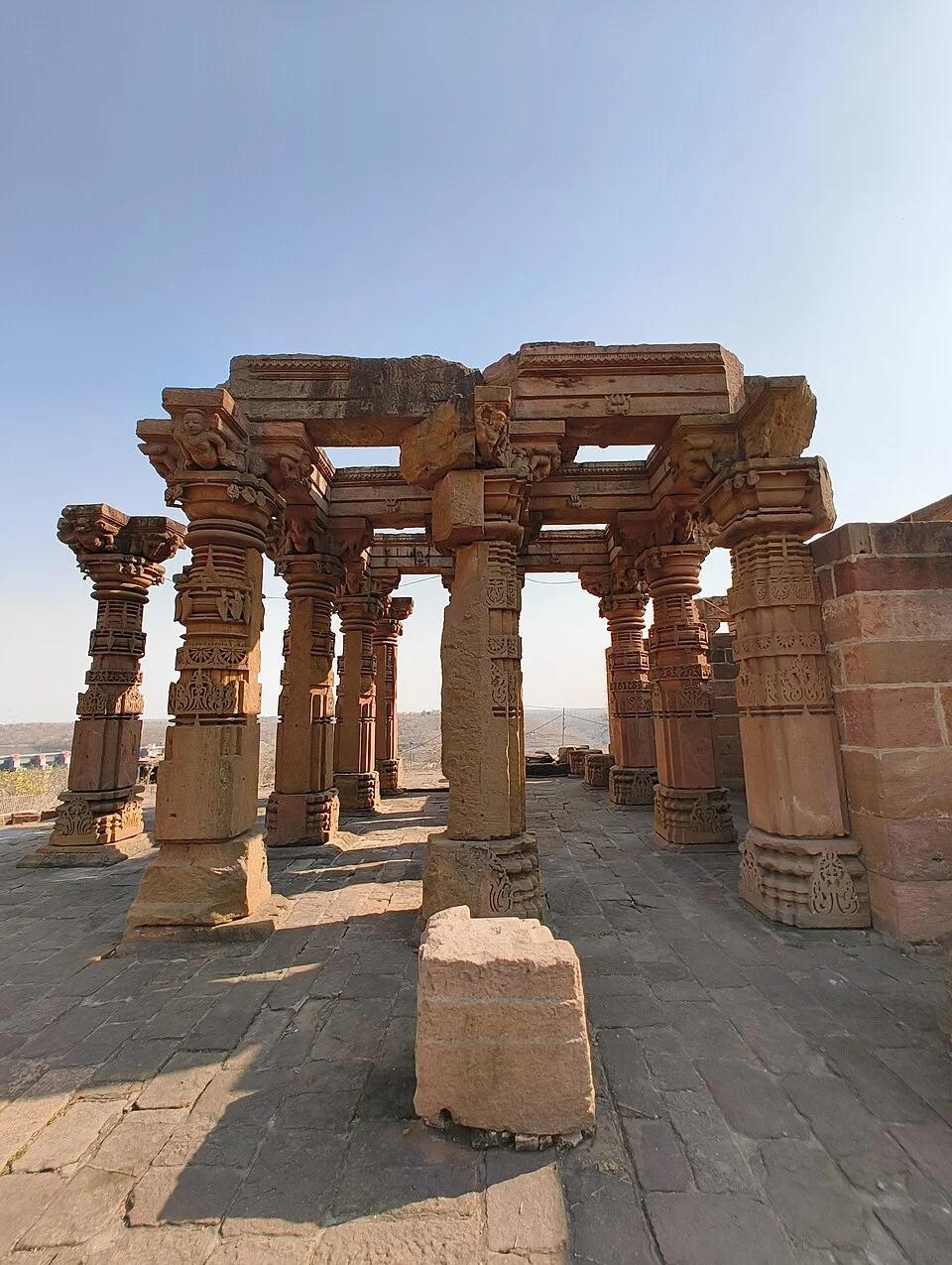
Standing proof of that stone craft survives across the hilltop colonnades of Siddhnath Temple and the mandapa of Mamleshwar Temple on the south bank, where Sanskrit slabs preserve verses of Pushpadanta’s Shiva Mahimna Stotra. Later, in the 18th century, Devi Ahilyabai Holkar of Indore revitalized the ghats, pilgrims’ shelters, and ceremonial endowments, establishing administrative continuity leading to today’s Shri Omkareshwar Mandir Trust.

Documented EpigraphyParamara stone architecture, Mahimna Stotra slabs & Holkar endowments.
Living TraditionShiva Purana lore, King Mandhata & Adi Shankaracharya lineage.
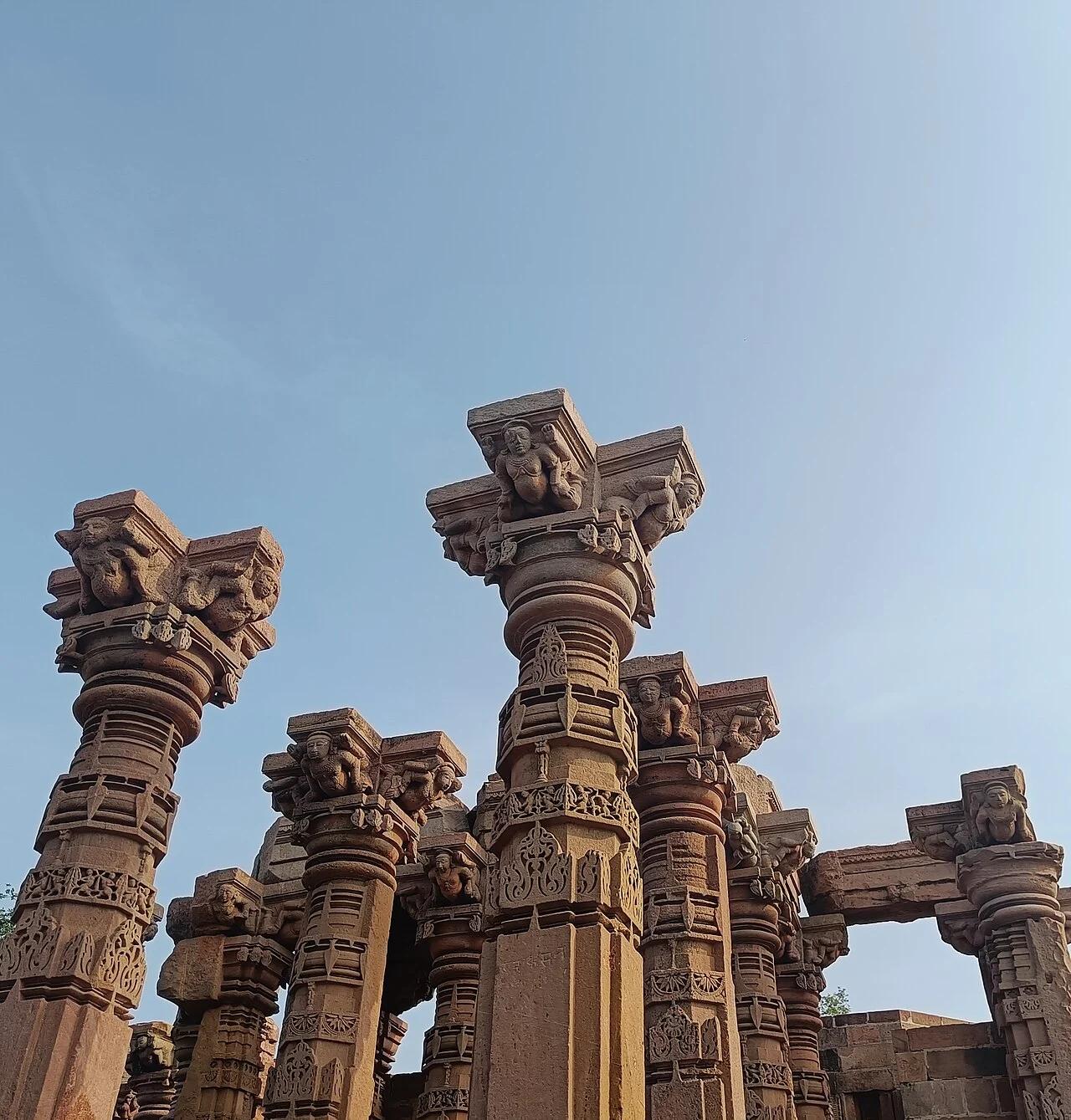
13th-century Paramara carved stone pillars of Siddhnath Temple atop Mandhata Island
Siddhnath Colonnade · Mandhata Hill PlateauSurviving medieval Paramara sandstone columns atop Mandhata hill. Photo: Kiranpawar3210 · Wikimedia Commons (CC BY-SA 4.0).

Chronological Heritage & Traditions

  1. Puranic TraditionLiving Tradition

    Vindhya & King Mandhata Sacred Lore

    The Shiva Purana (Kotirudra Samhita) narrates the penance of Mount Vindhya and Ikshvaku sovereign Mandhata along the Narmada, attributing both the island’s name and the dual Omkareshwar–Amaleshwar (Mamleshwar) worship to divine grace.

    Basis / Source: Scriptural & Puranic tradition (not a dated archaeological inscription)

  2. Early Shaiva TraditionAdvaita Tradition

    Adi Shankaracharya & Guru Govinda Bhagavatpada Cave

    Traditional biographies of Adi Shankaracharya record that the young seeker journeyed from Kerala to the Narmada cave beneath Omkareshwar, where Acharya Govinda Bhagavatpada initiated him into sannyasa and Advaita Vedanta.

    Basis / Source: Advaita biographical tradition revered at the subterranean cave below main shrine

  3. c. 10th–13th Century CEDocumented History

    Paramara Era Stone Temples & Mahimna Epigraphs

    Protected medieval stone monuments preserve Malwa’s Paramara sculptural craftsmanship: notably Siddhnath Temple atop Mandhata plateau (celebrated for pillared halls and elephant friezes) and Mamleshwar Temple bearing Sanskrit slabs of the Shiva Mahimna Stotra.

    Basis / Source: Khandwa District & ASI protected architectural heritage

  4. 18th Century CEDocumented History

    Devi Ahilyabai Holkar Civic & Ritual Endowment

    Indore’s ruler Devi Ahilyabai Holkar strengthened bathing ghats, pilgrim facilities, and ritual endowments across Narmada tirthas—including historic support for Mamleshwar’s ongoing daily earthen lingarchan tradition.

    Basis / Source: Holkar State archival & Narmada tirtha patronage records

  5. Present GovernanceOfficial Administration

    Shri Omkareshwar Mandir Trust & SADA Infrastructure

    Darshan queues, ₹300 Shighra Darshan passes, footbridge crowd regulation, and Ekatma Dham cultural works operate under the Shri Omkareshwar Mandir Trust, Khandwa District Administration, and Special Area Development Authority (SADA).

    Basis / Source: Official portal: shriomkareshwar.org · khandwa.nic.in

Temple Architecture & Sacred Sites

Stone Architecture of Omkareshwar, Mamleshwar & Ekatma Dham

White spire of Shri Omkareshwar Temple rising over rocky riverfront terraces
Multi-phase Restorations · Active Jyotirlinga

Shri Omkareshwar Hill Sanctum & Mandapas

Built across tiered terraces clinging to Mandhata rock above the Narmada, the temple leads devotees through pillared halls into an asymmetrical, naturally contoured inner garbhagriha housing the water-washed Swayambhu lingam.

60+ carved stone pillars across its central assembly halls and upper terraces.

Wikimedia Commons · CC BY-SA 4.0
Full shikhara and carved pillared mandapa of Shri Mamleshwar Temple
Medieval Paramara Style · ASI Protected

Shri Mamleshwar (Amaleshwar) Temple & Stone Slabs

Constructed in finely joined sandstone and basalt blocks, Mamleshwar preserves carved bracket capitals, guardian lions, and inscribed wall slabs carrying verses of Pushpadanta’s Shiva Mahimna Stotra.

Open courtyard setting ideal for peaceful reflection and daily Vedic lingarchan.

Bernard Gagnon · Wikimedia Commons (CC BY-SA 3.0)
Weathered carved red sandstone pillars of Siddhnath Temple on Mandhata plateau
c. 13th Century Paramara Architecture

Siddhnath Temple Courtyard & Gajathara Frieze

Perched prominently along the island plateau trail, Siddhnath stands atop a raised plinth originally surrounded by carved elephant bands and cruciform stone pillars bearing kichaka bracket figures.

One of the finest surviving medieval stone monuments on Mandhata hill.

Kiranpawar3210 · Wikimedia Commons (CC BY-SA 4.0)
Beneath Main Temple · Tradition

Adi Shankaracharya Meditation Cave

Situated directly below the main temple terrace via stone steps, this quiet subterranean chamber is revered as the meditation sanctuary where young Shankara received monastic initiation from Guru Govinda Bhagavatpada.

Mandhata Hilltop · Ekatma Dham

Ekatma Dham — Statue of Oneness (108 ft)

Crowning Mandhata hill, the 108-foot bronze Statue of Oneness portrays 12-year-old Adi Shankara alongside the Advaita Vedanta cultural campus overlooking the Narmada valley. Confirm local visiting hours and shuttle access on arrival.

Personalized Yatra Planner

Plan Your Omkareshwar Yatra

Choose your date, starting hub, group size, duration, priorities, and mobility pace to preview a tailored Omkareshwar itinerary immediately.

5. Temple Priorities
6. Mobility Consideration

Generated Omkareshwar Sequence

2 Travelers • Standard Pace

6 Steps
  1. 1
    Morning · 06:30–08:00

    Arrive via Indore Airport / City & Mainland Cloakroom

    Travel via Simrol Ghat & Barwaha to South Mainland parking before footbridge entry. Park vehicles and deposit large bags/footwear on the mainland before crossing bridges.

  2. 2
    Morning · Narmada Bank

    Ghat Aachaman & Narmada Jalabhishek

    Perform Narmada snan/aachaman inside demarcated safety chains (vigilant for dam siren alerts) and collect river water.

  3. 3
    Core Sanctum Darshan

    Cross Bridge → Shri Omkareshwar & Footbridge → Shri Mamleshwar

    Plan around the 12:20–01:15 PM Bhog and 04:00–04:30 PM Shringar pauses. Cross footbridge for Omkareshwar Mandir, then walk back across Mamleshwar Setu to complete twin-shrine worship at Mamleshwar.

  4. 4
    Midday / Post-Break

    7.2 km Mandhata Island Parikrama Trail (~2.5–3.5 hrs)

    Follow the hilltop trail past Gauri Somnath, 13th-century Siddhnath columns, Narmada–Kaveri Sangam, and Rinmukteshwar carrying drinking water.

  5. 5
    Afternoon Spiritual Heritage

    Adi Shankaracharya Cave & Ekatma Dham (108-ft Statue)

    Visit the serene subterranean cave beneath the main temple, and (mobility/shuttle permitting) ascend Mandhata peak for the Statue of Oneness viewpoint.

  6. 6
    Evening Departure / Shayan

    Optional Evening Narmada Aarti (or 09:30 PM Shayan) & Road Exit

    Note boat rides stop by dusk; for late return toward Indore Airport/Ujjain, leave daylight buffer along the Simrol hill section.

Save This Itinerary or Request Local Coordination (Optional)
Nearby Sacred Places & Circuits

Nearby Shrines & Regional Pilgrimage Excursions

Explore authentic nearby sites around Mandhata Island alongside curated regional links to Maheshwar and Ujjain Mahakaleshwar.

3 Stops Selected
Shri Mamleshwar Temple on southern mainland shore
Twin Jyotirlinga~450 m • South Bank (8 min walk)

Shri Mamleshwar (Amaleshwar) Temple

Protected stone shrine across the Narmada bridge, housing the complementary Jyotirlinga required to complete Omkareshwar pilgrimage.

Detailed carved sandstone pillar capitals at Siddhnath Temple
13th C. Paramara ArtOn Mandhata Trail (~3.5 km loop)

Siddhnath Temple & Plateau

Elevated medieval Paramara temple monument along the 7.2 km Mandhata Parikrama path overlooking the island ridge.

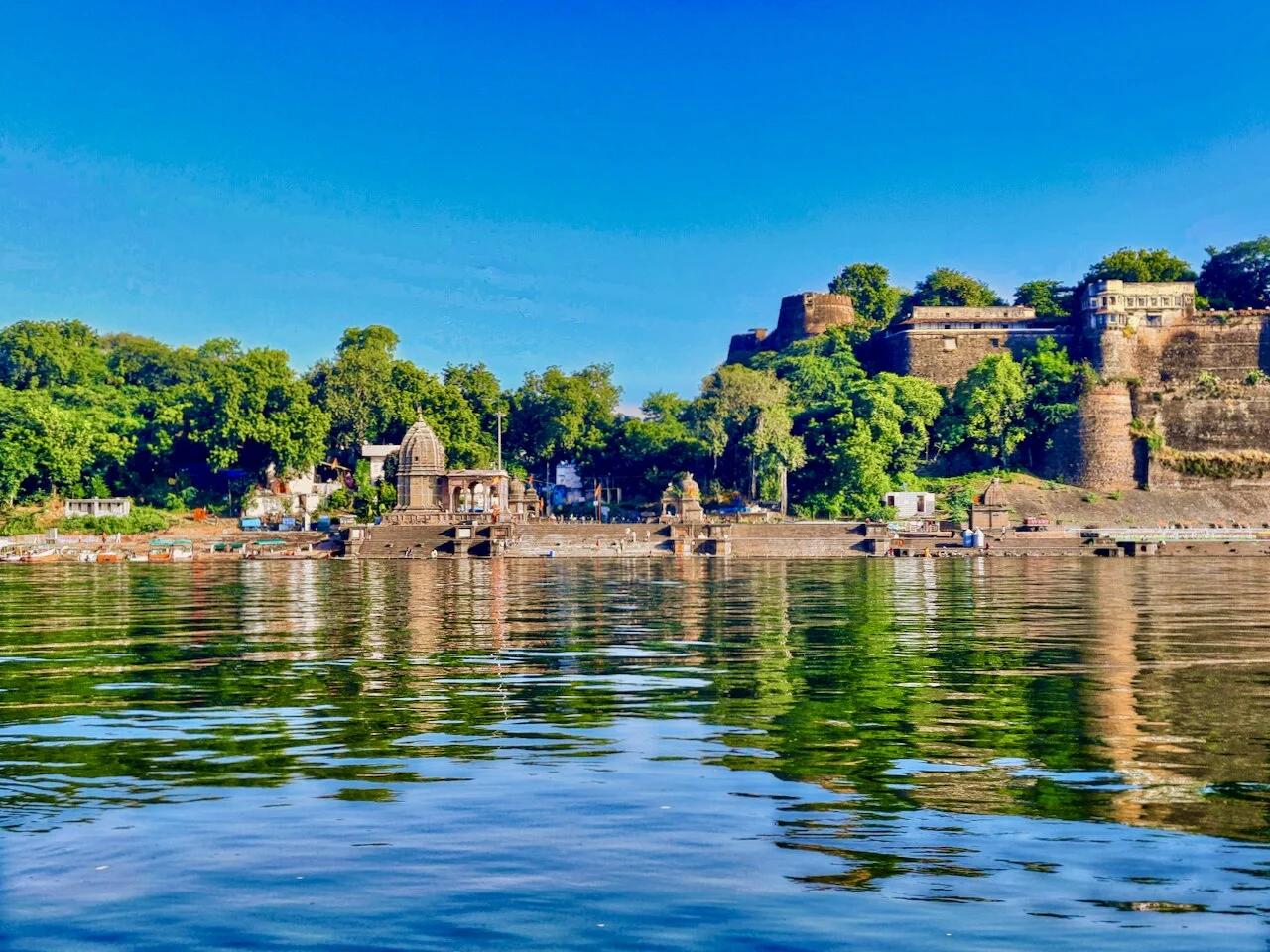
Footbridge and riverside stone ghats across the Narmada at Omkareshwar
Sacred River GhatsIsland & South Shorefronts

Gomukh & Nagar Narmada Ghats

Stepped riverbanks for holy Narmada aachaman, evening lamp offerings, and regulated crossings—always observe safety chains and dam sirens.

Ahilya Fort ramparts and stone bathing ghats reflected in River Narmada at Maheshwar
Holkar Heritage Town~65 km West (approx. 1.5 hrs drive)

Maheshwar Ahilya Fort & Ghats

Historic 18th-century Narmada capital of Devi Ahilyabai Holkar—celebrated for riverside Shiva temples, grand ghats, and handloom weaving.

Illuminated tiered shikhara of Shri Mahakaleshwar Jyotirlinga Temple in Ujjain
Twin MP Jyotirlinga~135 km North via Indore corridor

Shri Mahakaleshwar Jyotirlinga, Ujjain

Combine both Jyotirlingas of Madhya Pradesh on one journey: South-facing Mahakal on Shipra River and Omkareshwar on Narmada.

Your Selected Pilgrimage Stops

Shri Mamleshwar (Amaleshwar) Temple → Siddhnath Temple & Plateau → Maheshwar Ahilya Fort & Ghats

Build Itinerary Below
Travel & Access Logistics

How to Reach Omkareshwar — Air, Rail & Road

Grounded regional transport options via Indore Airport, Khandwa Junction, Omkareshwar Road, and mainland highway corridors.

Request Cab Quote on WhatsApp
By Air

Devi Ahilyabai Holkar Airport, Indore (IDR)

~77–85 km via Simrol Ghat & Mortakka

Well connected to Delhi, Mumbai, Bengaluru, Hyderabad, Ahmedabad, and Pune. From the airport, hire a pre-paid or private taxi across the Vindhya ghat road (Indore–Icchapur corridor). Verify road/ghat traffic conditions before dawn departures.

By Rail

Khandwa Jn (KNW) · Indore Jn (INDB) · Omkareshwar Rd (OMK)

KNW ~70 km · INDB ~80 km · OMK ~12 km

Khandwa Junction is the key broad-gauge hub on the Mumbai–Delhi & South India main line; Indore connects Western/Central routes. Omkareshwar Road (Mortakka, ~12 km) serves local passenger trains—check current Indian Railways timetables before booking.

By Road & Last-Mile

Indore–Icchapur Highway (SH-27) → Mainland Bus Stand & Parking

Motor vehicles stop on South Mainland before footbridges

Buses and cabs arrive at the South Bank mainland depot / parking zones (such as Bramhapuri & Gajanan area). Private cars cannot cross onto Mandhata Island; final access is on foot across Mamleshwar Setu / New Suspension Bridge or via regulated river boats.

Regional Distance & Last-Mile Matrix

Travel durations & fares vary by season, Simrol roadwork, and operator
Omkareshwar Road Station (OMK · Mortakka)
~12 km
Omkareshwar Approach Rd → South Mainland
Auto / Shared Jeep / Local Bus
Khandwa Junction Railway Station (KNW)
~70 km
SH-27 via Deshgaon & Mortakka
State Bus / Private Taxi
Indore Airport (IDR) & Indore Junction
~77–85 km
Indore–Icchapur Highway via Simrol Ghat & Barwaha
Regular Buses / Taxi via Ghat Section
Maheshwar (Ahilya Fort · Narmada Bank)
~65 km
Barwaha → Dhamnod Link Road
Private Taxi / Regional Bus via Barwaha
Ujjain (Shri Mahakaleshwar Jyotirlinga)
~135 km
Indore Bypass → Simrol Ghat → Barwaha → Omkareshwar
Direct Bus (Limited) / Intercity Taxi via Indore

Last-mile note: Motor vehicles terminate on the southern mainland (e.g., Bramhapuri / Bus Stand zones). Final temple approach is pedestrian via suspension footbridges or daytime boats.

Stay Areas & Visitor Planning

Where to Stay — Mainland South Bank vs Mandhata Island

Choosing between the south mainland bank and Mandhata Island determines parking access, walking stairs, and luggage convenience. Confirm room availability directly with institutions or official portals prior to arrival.

Zone 1 · South Mainland BankRoad-Accessible & Family Friendly

Mainland Shore, Bramhapuri & Mortakka

Direct taxi/car drop-off at your stay without hauling suitcases over pedestrian bridges. Closer to Mamleshwar Temple and convenient for early morning exits toward Indore or Ujjain.

Zone 2 · Mandhata IslandWalk-Only Beyond Bridge

Temple Vicinity & Island Lanes

Nearest location for early-morning Mangal Darshan and dawn start on the 7.2 km parikrama, but visitors must carry luggage on foot across suspension bridges and hillside lanes.

Trust Dharamshalas & Bhakta Sansthans

Long-standing pilgrimage accommodations such as Shri Gajanan Maharaj Sansthan and local community bhavans typically prioritize simple rooms and satvik dining. Verify booking window and occupancy rules directly with the trust or institution before arrival.

MP Tourism & Narmada Valley Retreats

State tourism properties and regional resorts along the mainland / Mortakka approach offer road-level vehicle parking and wider family amenities. Confirm availability and seasonal tariffs strictly on official portals before booking.

Ghat-Side Lodges & Guest Houses

Compact lodges clustered near South Bank roads and island market alleys offer walking convenience to early Mangal Aarti. Island rooms involve footbridge crossing and stair walks—check stair access if travelling with seniors.

During Shravan, Maha Shivratri, and Kartik Purnima, rooms fill weeks in advance—verify directly via official portals.Check Trust Information
Sacred Dhyana & Vedic Chanting

Omkareshwar Dhyana Sloka & Maha Mrityunjaya Mantra

Dvadasa Jyotirlinga Stotram — Omkareshwar Invocation

कावेरिकानर्मदयोः पवित्रे समागमे सज्जनतारणाय ।
सदैव मान्धातृपुरे वसन्तम् ओंकारमीशं शिवमेकमीडे ॥

I bow to Lord Shiva dwelling forever as Omkareshwar at the sacred Mandhata confluence of the Narmada and Kaveri for the liberation of devotees.

Rigveda 7.59.12 — Maha Mrityunjaya Vedic Chanting

ॐ त्र्यम्बकं यजामहे सुगन्धिं पुष्टिवर्धनम् ।
उर्वारुकमिव बन्धनान्मृत्योर्मुक्षीय माऽमृतात् ॥

Om Tryambakam Yajaamahe Sugandhim Pushti-Vardhanam । Urvaarukamiva Bandhanaan-Mrityor-Muksheeya Maamritaat ॥

Essence: We meditate upon the Three-Eyed Lord, fragrant and nourishing all beings; may He release us effortlessly from bondage into spiritual peace and inner steadiness.
Maha Mrityunjaya Chanting Audio Track0:00 / 0:00
Mindful Japa Counter

Tap the center dial after completing each sacred repetition.

Sacred Liturgical Calendar

Major Annual Festivals & Shravan Sawari

Important seasonal celebrations at Mandhata Island and the Narmada riverfront—expect regulated bridge queues during these windows.

Peak Crowd Advisories
Living River TraditionMondays of Shravan (July – August)

Shravan Somwar Royal Sawari (Nauka Vihar)

Lord Omkareshwar’s silver palanquin proceeds from the hill sanctum to Nagar Ghat and crosses River Narmada on a decorated ceremonial boat before visiting Lord Mamleshwar on the south bank.

All-Night VigilPhalguna Krishna Trayodashi (Feb / March)

Maha Shivratri Mahotsav

Extended 24-hour darshan operations with overnight Char Prahara Rudrabhishek rituals, floral adornments, and thousands of earthen lamps illuminating Mandhata and Mamleshwar ghats.

Sacred River FestivalMagha Shukla Saptami (Jan / Feb)

Narmada Jayanti & Chunari Manorath

Marks the sacred appearance day of Mother Narmada. Devotees offer a ceremonial chunari stretched across the river channel and perform evening maha-aarti with floating lamps.

Traditional Parikrama FairKartik Purnima (Nov / Dec)

Kartik Purnima Snana & Mela

Major traditional pilgrimage gathering for auspicious Narmada holy baths, temple darshan, and completing the 7.2 km Mandhata Island Parikrama on foot.

Pilgrim Help & Guidance Center

Omkareshwar Darshan, Parikrama & Travel FAQs

Filter by topic or search keywords across Mamleshwar pairing, the 7.2 km Mandhata Parikrama, official Trust hours, bridges, and regional transit.

20Verified Answers
Showing 8 of 20 matching answers

Omkareshwar and Mamleshwar (Amareshwar) represent two manifestations of the single 4th Jyotirlinga split across the holy Narmada River. Omkareshwar stands on the north bank island of Mandhata, while Mamleshwar is situated on the south mainland bank. According to the Shiva Purana, a pilgrimage to Omkareshwar is complete only when both shrines are visited.

Reference: Shiva Purana Kotirudra Samhita, Ch. 18 (November 2026)
Timings & pass rules remain subject to Trust circulars. Confirm on shriomkareshwar.org.
Official Administration & River Safety

Official Mandir Trust Directory & Safety Notice

Published Trust contacts and national emergency numbers only—verify live circulars before Shravan or festival travel.

Shri Omkareshwar Mandir Trust

Omkareshwar (Mandhata), Tehsil Punasa, Dist. Khandwa, MP - 450554

Trust Office:07280-271228
Helpdesk (08–20h):+91 8989998686
Visit Official Trust Portal

Emergency & District Coordination

For medical, lost-person, or ghat assistance anywhere on the mainland or island, national helplines 112 & 108 operate 24/7.

National Emergency / Police:112
Medical Ambulance (MP 108):108
Khandwa District Pilgrim Info

Narmada & Consumer Advisory

  • Purchase ₹300 Shighra Darshan wristbands exclusively from Trust counters or shriomkareshwar.org.
  • Vacate low river rocks immediately upon hearing Omkareshwar Dam release warning sirens.
Disclosure: Tirth Yatra is an independent pilgrim planning portal; all official passes and timings remain under Shri Omkareshwar Mandir Trust.