


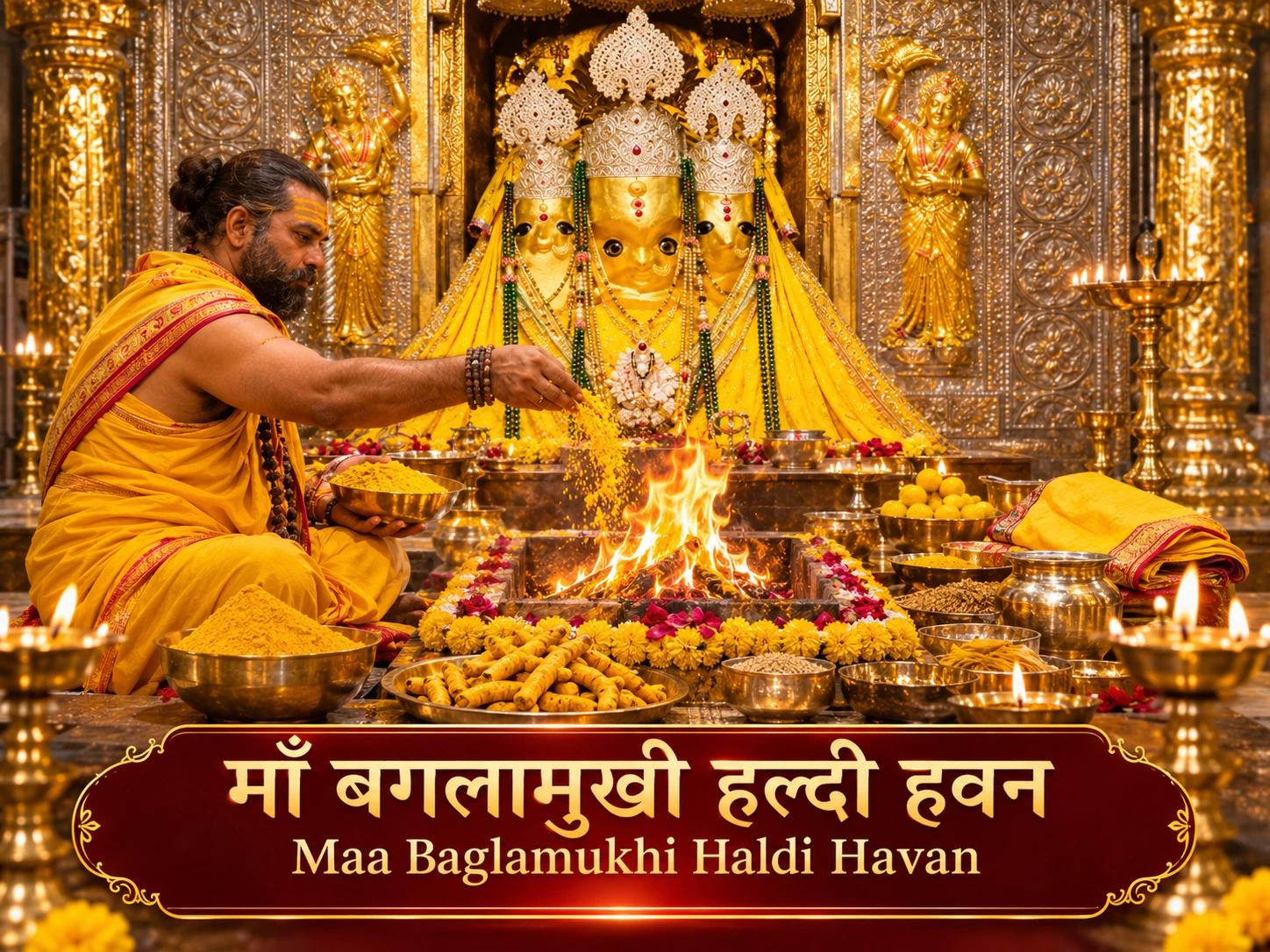
Maa Baglamukhi Haldi Havan
Understand the traditional symbolism of turmeric in Maa Baglamukhi worship, what to prepare, and questions worth asking before arranging a ceremony.
Why Turmeric Has a Special Place Here
Think of the occasions when you have seen haldi in an Indian home. A little turmeric may be placed beside flowers during worship. A wedding celebration may begin with a haldi ceremony. Yellow cloth and yellow offerings often appear when a family is praying for an auspicious beginning. The meanings can differ from one family and tradition to another, but the colour carries a familiar sense of hope and blessing.
That is a helpful starting point for understanding Maa Baglamukhi Haldi Havan.
Maa Baglamukhi is revered within Shakta traditions and is often associated with yellow, or peet, in devotional imagery and worship. A Havan is a fire offering in which prayers accompany the offering of suitable materials into a ritual fire. In a Haldi Havan, turmeric has a special place in the intended offering arrangement. The exact way a ceremony is conducted is not identical everywhere; it depends on the tradition followed, the officiating priest, the place, and the arrangements confirmed beforehand.
What Exactly Is Haldi Havan & Why Yellow Matters
In straightforward terms, Haldi Havan is a form of worship in which turmeric is given particular symbolic importance alongside prayers to Maa Baglamukhi. It belongs to the wider practice of fire offerings and should not be confused with every other ritual that happens to include a small amount of turmeric.
People may encounter the words haldi, haridra, and turmeric when reading about this practice. They refer to the same familiar plant ingredient, although the form of turmeric used in a particular offering—whole dried rhizome, powder, or another preparation—must be confirmed with the officiant. The mention of whole turmeric roots in some traditions is a proposed ritual arrangement, not a universally verified rule.
Turmeric has a long cultural history in South Asia. Its warm yellow colour has been associated with auspicious occasions, good fortune, and important family ceremonies. Within Baglamukhi devotion, the yellow colour reminds devotees of Maa’s familiar Peetambara imagery. The connection is symbolic and religious; it is described in the language of belief rather than treated as a scientific formula.
Realistic Perspective: A useful question to ask is not “How many kilograms guarantee a result?” but “What is the meaning of the offering, and how is it actually prepared in the tradition I am following?” A responsible practitioner explains the approach without pressuring the devotee or making extravagant promises.
Why Some Devotees Enquire About This Havan
People rarely approach a temple with only one feeling. A family may be preparing for a new beginning, carrying worries, or simply wanting to offer gratitude. The reasons need not be dramatic.
1. A New Beginning
A family planning a wedding, moving house, or starting an important chapter. Haldi’s traditional link with auspicious beginnings makes this symbolism especially meaningful.
2. Family Peace & Togetherness
When a household has been tense, arranging a shared act of worship gives a moment to slow down and reconnect. Practical conversation and boundaries remain important.
3. Business or Career Uncertainty
A devotee starting a venture or facing workplace uncertainty praying for clarity, courage, and steadiness. Not a shortcut to securing profit or eliminating debt.
4. Gratitude & Ordinary Devotion
Not everyone comes with a crisis. Some enquire to give thanks, observe a milestone, or understand a revered tradition. This deserves equal respect.
5. When There Is Illness or Emotional Strain (Not a Medical Cure)
Prayer can be a source of personal comfort, but it is never a medical treatment. Do not use Havan smoke or turmeric offerings as clinical cures. Those with respiratory conditions, pregnancy, or heat sensitivity must consult doctors and arrange accommodations beforehand.
Haldi Havan, Ordinary Havan and Mirchi Havan: What Is Different?
Choosing a ritual should begin with understanding the worship tradition, confirming what is genuinely offered, and deciding whether the observance fits your family’s intentions:
| If you are trying to understand... | Read / enquire about... |
|---|---|
| General fire worship at Nalkheda | Maa Baglamukhi Havan |
| Turmeric-centred symbolism and offerings | Maa Baglamukhi Haldi Havan (This Page) |
| A ritual described specifically as Mirchi Havan | Maa Baglamukhi Mirchi Havan |
| A quieter prayer or general Sankalp | Maa Baglamukhi Puja & Special Archana |
| A recitation-focused observance | Maa Baglamukhi Mantra Jaap |
What a Devotee May Experience During the Ceremony
The following is a general overview, not a fixed script for all Haldi Havans. The actual steps, materials, and duration must be confirmed with the officiating Acharya:
Before the Ceremony
Explain the intention of the prayer, confirm the venue, and understand arrangements. If a Sankalp is part of the practice, share only what is necessary; personal problems need not be narrated publicly.
Preparation & Worship
The officiant explains preparations and begins worship according to tradition. Do not assume every published material or online step is included in the purchased arrangement.
Offerings & Participation
Turmeric is the distinguishing offering, but its form and quantity should be agreed upon. Devotees should be shown where to sit, how to participate safely, and what to do if smoke becomes uncomfortable.
Closing the Observance
The ceremony concludes with concluding prayers and distribution of prasad only if part of the actual arrangement. Never promise couriered items or live broadcasts without operational confirmation.
Preparing for a Visit: 5 Practical Questions to Ask
Maa Baglamukhi Temple is in Nalkheda, Agar Malwa district, Madhya Pradesh, by the Lakhundar River. Before travelling, ask five practical questions:
- 1.What is confirmed? Date, reporting time, exact location, duration, and who will guide the ceremony.
- 2.Who provides the materials? Ask for an itemized list instead of assuming every package includes the same quantities.
- 3.What does the quote cover? Clarify priest services, samagri, any applicable official charges, receipt status, and cancellation terms separately.
- 4.What about participation & comfort? Ask about seating, accessibility, children, elderly relatives, smoke sensitivity, and venue restrictions.
- 5.How will confirmation reach you? Expect a written record of what has actually been arranged. Treat an enquiry and a confirmed booking as different states.
Transparent Note on Temple Charges
Earlier site copy asserted a statutory ₹350 token fee. Because current formal administrative notices vary, confirm any applicable charges directly with the authorized temple counter or official portal before paying.
What Haldi Havan Can Mean — and What It Cannot Promise
A ceremony may offer a person a sense of participation, reflection, gratitude, or connection with a treasured tradition. Those experiences are deeply personal, and different devotees will describe them differently.
Important Ethical Boundary
No one can responsibly promise that one Havan will cure an illness, resolve a legal dispute, guarantee marriage, remove financial burdens, or change another person’s behaviour. Clear explanations and realistic expectations are essential.
Start with a conversation, not a payment. Clarify participation and arrangements before deciding.
Researched Inquiries & Frequently Asked Questions
It is a fire-offering observance associated with Maa Baglamukhi in which turmeric has particular symbolic importance. The actual method varies with the officiating tradition and confirmed arrangements.
Experiences Shared by Devotees
Authentic reflections shared by devotees who performed or participated in Maa Baglamukhi Haldi Havan.
Be the First Devotee to Share Your Experience
No reviews have been published for this ritual yet. TIRTH YATRA strictly shows genuine user submissions and never manufactures ratings.
Agamic Sources & Related Offerings
Plan Your Sacred Ceremony with Verified Acharyas
Receive traditional guidance from verified Nalkheda purohits. Clarify auspicious muhurta, samagri, and participation arrangements with complete transparency.