


Maa Baglamukhi Mirchi Havan
Understand why Mirchi Havan is discussed in Maa Baglamukhi traditions, differences from ordinary Havan, smoke safety questions, and how to make a transparent enquiry.
Availability, ingredients, venue, duration, safety arrangements and charges are confirmed only after enquiry.
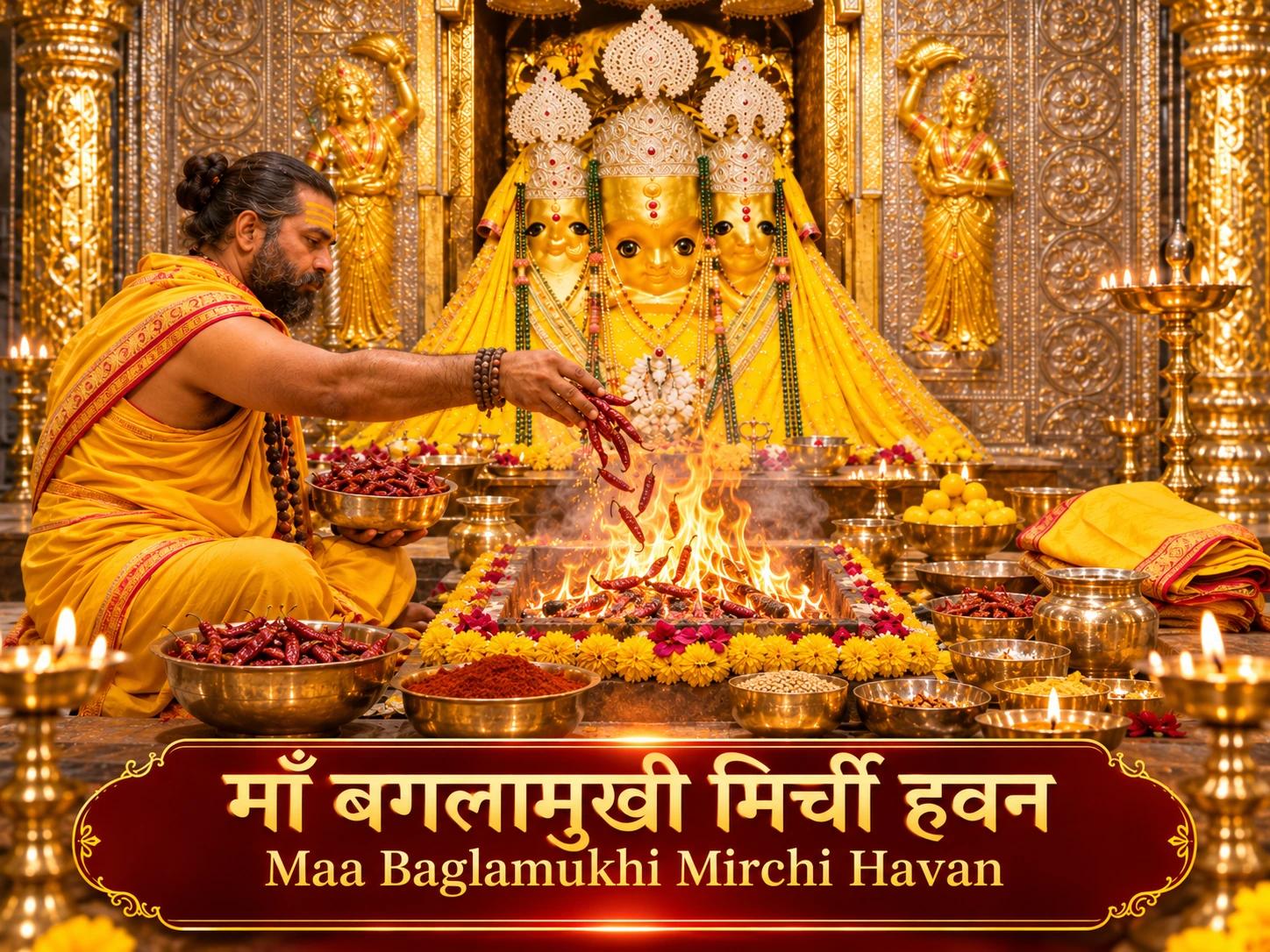
Why This Ritual Raises So Many Questions
A person may first hear about Mirchi Havan from a relative, a short social video, a priest's recommendation or a conversation about a difficult period of life. The name tends to stay in the mind. It sounds particular, and the stories around it can make it seem as though this is a ritual reserved for extraordinary problems.
That is exactly why a responsible explanation matters. A ritual should not become more appealing because someone is frightened into believing that an enemy, a curse or a hidden force is responsible for every setback. Work pressure, family disagreements and legal worries are real enough without having an additional story placed on top of them. Some devotees choose prayer as one way of finding composure in such moments. Others visit Maa Baglamukhi simply out of faith, without a specific crisis.
Mirchi Havan is a name used for a specialized form of worship associated in popular descriptions with chilli-related offerings and the protective symbolism of Maa Baglamukhi. But the name alone cannot tell you which tradition a particular practitioner follows, what is actually included or whether the arrangement is appropriate. It certainly cannot establish that a service is currently authorized at any particular temple venue.
Maa Baglamukhi, Speech and the Idea of Stillness
Maa Baglamukhi is revered in Shakta devotional traditions. One word often mentioned in discussions of Her worship is stambhana. It is usually translated in a simplified way as stilling, restraining or bringing something to a halt. Religious traditions and practitioners do not all explain it in exactly the same way.
For an ordinary devotee, there is a less sensational question to begin with: what would it mean to become steadier in a difficult conversation? To pause before responding in anger? To stop allowing fear to direct every decision? Some worshippers find the imagery of Maa Baglamukhi meaningful precisely because it invites contemplation of speech, conflict and restraint.
It would be misleading to turn that symbolism into a claim that a ceremony can silence an opponent, force someone to behave differently or secure a court result. A devotional practice can have personal meaning without being sold as a means of controlling another person. Any consultation should respect that boundary.
What Does “Mirchi Havan” Actually Refer To?
A Havan or Homa is broadly a fire-offering observance in which a priest may recite prayers or mantras while offerings are made into a ceremonial fire, according to the chosen tradition. Mirchi Havan is commonly described as a more specialized ritual category. The word mirchi refers to chilli, but internet descriptions frequently disagree about the specific materials, purpose, setting and process.
Those disagreements matter. The public should not be given one confident, universal checklist and told that every local practitioner must follow it. This page deliberately avoids prescribing ingredients, quantities, mantras or a burn sequence. Those details would need to come from a properly qualified practitioner, be consistent with the venue's rules and be reviewed with practical safety in mind.
You may see Mirchi Havan described online as a “Tantrokta” ritual. Tantrokta is a broad descriptor indicating connection with a tantric textual or ritual framework; it is not a reliable synonym for Mirchi Havan. Compare the actual ritual scope before assuming any two rituals are identical.
Nalkheda Setting & Independent Evidence
The Maa Baglamukhi temple at Nalkheda is in Agar Malwa district, Madhya Pradesh. The district administration places it beside the Lakhundar River (District Agar Malwa Official Tourism Record [R1]). This gives visitors a verified geographical anchor for planning darshan and asking about fire worship arrangements.
The same district page refers visitors to a temple website for general Havan booking information. That is helpful, but it does not prove that a specific Mirchi Havan takes place at a named riverbank kund, that a particular priest is available, or that TIRTH YATRA has an official booking relationship. The right approach is to confirm the proposed venue and permission arrangements for the specific date and service.
Descriptions of 201 consecrated kunds and a fixed ₹350 “government receipt” appear elsewhere in older internet content. Until independently supported by a dated, authorized notice, neither should be repeated as a verified requirement for Mirchi Havan. A devotee deserves to know who collects a payment, why it is charged and which receipt will be provided.
Why Devotees Enquire About This Ritual
A meaningful conversation begins with an honest understanding of your circumstances. Here are four common contexts in which devotees seek information about this tradition:
An argument at work turns into weeks of tension, or a family dispute makes ordinary conversations painful. Devotees may look for prayer to find composure while learning to respond more calmly, rather than escalating every disagreement into a crisis.
People sometimes speak of “shatru badha” when facing hostility or repeated obstacles. A devotee may pray for courage and peace of mind while documenting harassment and taking proportionate, lawful steps to protect themselves.
A difficult hearing or business partnership disagreement creates understandable anxiety. Prayer provides a devotional routine, but cannot promise a specific judicial outcome or contract. Qualified legal advice remains essential.
Not every question is a booking enquiry. Devotees often want to know why chilli is mentioned in descriptions, how it relates to general Havan, or what smoke safety precautions are necessary. Clear answers should be accessible freely.
Critical Safety & Smoke Considerations
Smoke from burning irritant materials such as chillies may cause eye and respiratory tract discomfort. It should never be treated as harmless. Deliberate inhalation of pungent smoke must be avoided, and any proposed rite requires open-air riverside settings with unimpeded cross-ventilation.
Devotees with asthma, chronic obstructive pulmonary disease, allergies, or breathing sensitivities must not attend smoke-intensive activities without prior clearance from their healthcare professional. Special caution is warranted for children and elderly family members. Enduring respiratory distress is never a devotional virtue; safe alternatives or choosing not to arrange fire rites must always remain open.
This platform strictly avoids providing DIY burn instructions, chilli quantities, or home procedures. Availability, safety measures, and permissions must be verified directly with qualified officiants at authorized venues.
Comparing Approved Offerings & Devotional Paths
Understanding how different approved offerings relate to one another helps devotees make an informed choice based on tradition and suitability, not exaggerated claims of supernatural power:
| Offering Name | Primary Focus & Materials | Devotional Intention | Atmosphere & Safety |
|---|---|---|---|
| Maa Baglamukhi Havan | Traditional wood, pure ghee, yellow mustard & herbal havan samagri | General fire worship, gratitude, devotional focus & peace | Standard ceremonial fire smoke; open-air pavilions |
| Maa Baglamukhi Haldi Havan | Turmeric roots, yellow cloth & auspicious natural offerings | Auspicious beginnings, health vitality & family harmony | Mild aromatic smoke; standard safety practices |
| Maa Baglamukhi Mirchi Havan (This Page) | Chilli symbolism discussed in specialized traditions | Seeking composure and stillness during acute conflict | Pungent smoke; strict open ventilation & respiratory caution |
| Shatru Badha Nivaran Puja | Devotional prayers, sankalp & calm archana offerings | Prayers for resolving interpersonal opposition & worry | No intense smoke risk; gentle sanctuary atmosphere |
If your concern is primarily legal dispute anxiety, read the Court Case Victory Puja page. Separately, Shmashan Shatru Vinash Baglamukhi Anushthan is a separately described specialist ritual with its own considerations. Neither should be sold as a guaranteed weapon.
How an Enquiry Should Be Handled — 5 Steps
Explain the Concern or Intention in Plain Language
Describe your reason for enquiring in ordinary words. There is no requirement to share intimate family quarrels publicly or accept a supernatural diagnosis.
Ask What Is Actually Being Proposed
Confirm which worship tradition is followed, the exact venue, whether current permissions apply, who may attend, and why this service is being recommended.
Confirm Smoke Precautions and Air Quality
Chilli smoke can irritate airways. Discuss seating, cross-ventilation, crowd size, and disclose any respiratory condition before agreeing.
Understand the Money Item by Item
Ask for a written quote separating officiant fees, materials, venue fees, and rescheduling terms. Avoid paying on an unverified “official” label.
Confirm Everything in Writing Before Travelling
Exact date, venue, responsible contact person, inclusions, and cancellation terms should be in hand before you travel or pay.
Faith Alongside Practical Action
Faith and practical action are not opposites. If someone is threatening or harassing you, preserve evidence, seek appropriate support and contact relevant authorities when necessary. For legal disputes, consult a qualified lawyer. For business disagreements, put terms in writing and obtain independent professional advice.
If fear or sleeplessness is becoming overwhelming, speak with a suitable healthcare professional rather than assuming it has a supernatural cause.
Prayer may remain personally important through any of these situations. What it must not do is delay medical care, isolate a person from support, or encourage retaliation. A meaningful religious guide leaves a reader better informed and more capable of making a calm, balanced decision.
Questions to Ask Before Arranging Worship
Is this specialized observance currently permitted and available on your preferred date?
What cross-ventilation arrangements exist? Is it suitable for attending family members?
What is the written breakdown of priest dakshina, materials, and legitimate venue fees?
Would standard Havan or Shatru Badha Nivaran be a more appropriate, gentle starting point?
Begin With Clarity, Not Pressure
An honest consultation should leave you calmer and better informed, even if you decide not to arrange a ritual.
Researched Inquiries & Frequently Asked Questions
It is a name used for a specialized fire-worship observance associated in popular devotional accounts with Maa Baglamukhi. The exact tradition, materials and arrangements vary and must be confirmed with an authorized, knowledgeable practitioner; there is no single universally verified Nalkheda package described by this guide.
Experiences Shared by Devotees
Authentic reflections shared by devotees who performed or participated in Maa Baglamukhi Mirchi Havan.
Be the First Devotee to Share Your Experience
No reviews have been published for this ritual yet. TIRTH YATRA strictly shows genuine user submissions and never manufactures ratings.
Agamic Sources & Related Offerings
Plan Your Sacred Ceremony with Verified Acharyas
Receive traditional guidance from verified Nalkheda purohits. Clarify auspicious muhurta, samagri, and participation arrangements with complete transparency.