


Navchandi Path & Havan
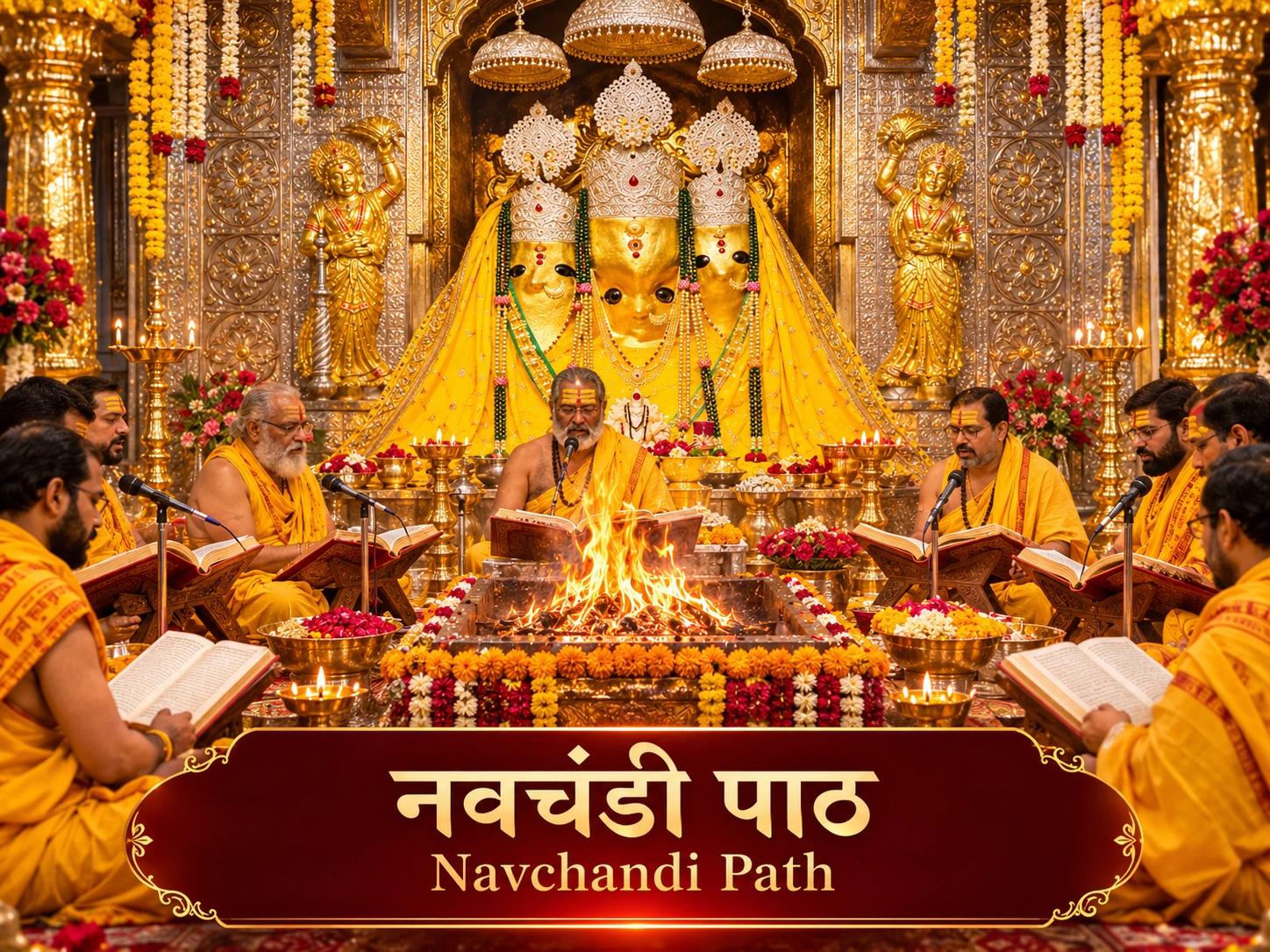
Devi Mahatmya (Durga Saptashati) recitation and sacred fire offering. Understand the framing story of Suratha and Samadhi, the ceremony stages, and transparent arrangements at Nalkheda.
Recitation scope, Havan inclusion, officiants, schedule and fees are confirmed in consultation.
A Story for People Who Have Lost Their Footing
Imagine two strangers meeting at a time when neither has much reason to feel hopeful. One has lost a kingdom. The other has been driven away by people he once trusted. They are not the same person, and their troubles are not the same. Yet they share a question: why does the mind keep returning to what has caused it pain?
That is the human doorway into the Devi Mahatmya, the sacred narrative often called Durga Saptashati or Chandi Path. In its framing story, King Suratha and a merchant named Samadhi approach the sage Medhas for understanding. The sage responds by telling them of the Goddess—her power, her victories, and the way divine strength is understood in the tradition. The story does not begin with a price list or a set of promises. It begins with people trying to make sense of loss and attachment.
Navchandi Path and Havan belongs to this larger world of Shakta devotion, where listening to and reciting the Goddess’s story is itself a form of worship. This page explains what the recitation tradition means, how a Havan may be related, and what needs to be clarified before you enquire about a ceremony in Nalkheda. It is not a claim that a particular ritual will solve every external problem.
Why the Durga Saptashati Story Stays With Its Listeners
The text is traditionally organised into thirteen chapters and three broad episodes (Charitas). Its narrative moves through different manifestations and battles of the Goddess, but reducing it to a catalogue of victories misses part of its appeal.
Chapter 1: Overcoming Inertia
Meeting the disorder of Madhu and Kaitabha; waking consciousness from spiritual inertia.
Chapters 2–4: Confronting Pride
The confrontation with Mahishasura; the united effulgence of divinity subduing rampant ego.
Chapters 5–13: Victorious Discernment
The resolution of Shumbha, Nishumbha, and Raktabija; wisdom clearing deep internal illusions.
The framing story returns to Suratha and Samadhi after they hear the sage’s teaching. Their journeys do not end in identical ways. Two people can approach the same spiritual story while seeking different forms of understanding. A genuine consultation should begin with that humility rather than promising one blanket result to everybody.
Chandi Path, Navchandi, and Havan: Key Differences
Devotees often encounter different terminology across temples and lineages. This comparison clarifies how each observance is traditionally scoped:
| Observance | Core Focus | Havan Inclusion | Typical Scope |
|---|---|---|---|
| Single Chandi Path | 1 complete recitation of 700 verses | Recitation only (Havan optional) | 3–4 hours (Single reciter) |
| Navchandi Path & Havan | Expanded 9-recitation sequence or parishad | Fire oblation included when contracted | Subject to recitation rounds & priest team |
| Maa Baglamukhi Havan | Dedicated to 8th Mahavidya with yellow samit | Pure sacrificial fire ceremony | 2.5–4 hours (Lakhundar riverfront) |
| Navratri Special Anushthan | 9-day festival observance during Navratri | Closing havan on Ashtami / Navami | 9 days & 9 nights (Festival bound) |
| Shatchandi Mahayajna | 100 complete recitations by large parishad | Dashansh havan with extensive offerings | Multi-day grand community observance |
When Devotees Feel Drawn to This Observance
Some families explore a collective Devi Path when they want to mark a significant transition—moving into a new phase of life, gathering for a shared prayer, or spending time in devotion during a difficult year. Others arrive with concerns about persistent family disagreements, business uncertainty, academic pressure or a need for emotional steadiness.
Devotional recitation becomes a shared act of reflection. Family counselling, respectful conversations, and practical conflict resolution still matter alongside prayer.
Prayer provides mental discipline and inner support; prudent business planning and qualified professional advice remain indispensable.
Ritual participation can be deeply meaningful for believers, but ongoing psychological distress deserves supportive medical and counseling care.
Expressing gratitude after recovering from adversity, or invoking blessings before stepping into a significant new stage of life.
What a Thoughtfully Arranged Ceremony May Involve
There is no honest way to publish a single “exact Navchandi Vidhi at Nalkheda” without confirmation from the actual organiser. What follows is an illustrative explanation of common liturgical components:
Clarifying the Intention (Sankalp)
The devotee specifies who participates and what the prayer is for. The organiser confirms which personal details are needed and safeguards privacy.
Setting & Preparatory Invocations
Ganapati, Kalash, and preliminary invocations. Confirming seating, venue access, and prayer environment.
Textual Recitation of the 13 Chapters
The core of the observance: clear pronunciation and attentive reading of the 700 verses by knowledgeable reciters.
Sacrificial Fire Havan (If Contracted)
If fire offering is agreed, ahutis of pure cow ghee, payasam, and herbs are offered with prescribed mantras.
Purnahuti, Aarti & Conclusion
Final purnahuti coconut oblation, concluding aarti, sacred thread, and prayers for universal peace.
How to Prepare Without Turning Devotion Into a Checklist
You do not need to know every Sanskrit term before making an enquiry. Begin with practical details: number of participants, preferred date, mobility limitations, and whether children or elderly family members are joining. Ask how long the programme may last, whether seating and water are available, and whether there will be smoke from a fire offering.
If the ceremony includes Havan, visitors with asthma or respiratory conditions should discuss exposure and seating distance in advance. There is no reason to assume that ritual smoke is therapeutic. Follow reasonable safety precautions and maintain your medical regimen.
Simple, clean attire suitable for a religious visit is a sensible starting point. No mandatory color or fasting rule is legally imposed; personal health and comfort must always come first.
Nalkheda: Location, Meaning, and Honest Expectations
Nalkheda is in Madhya Pradesh’s Agar Malwa district, and official district information places the Maa Baglamukhi temple beside the Lakhundar river. For devotees, visiting a place of worship carries its own emotional weight. Being near the temple does not make TIRTH YATRA the temple committee or give it authority to issue official tokens. The published government source directs pilgrims to the temple’s own official website for official services.
- How many readings and which officiants are confirmed
- Whether Havan is included or charged separately
- Exact venue, duration, and family attendance terms
- Clear receipt, cancellation, and refund policies
What This Devotion Can — and Cannot — Promise
The Devi Mahatmya has been read with reverence across generations. That gives it cultural and devotional significance. It does not establish that a single ceremony will reverse medical illness, secure a job, settle litigation, eliminate debt, change another person’s behaviour or guarantee a marriage.
If you are going through a difficult time, approach prayer as one part of a larger life: alongside careful decisions, open conversations, medical care, legal counsel, and attention to those who depend on you. The purpose of this guide is to help you understand the tradition and ask informed questions—not to pressure you into a transaction.
Before You Enquire: Six Questions That Matter
Before confirming arrangements with any priest or coordinator, ensure you receive clear answers to these six practical questions:
Ask for the complete arrangement in writing before deciding.
Researched Inquiries & Frequently Asked Questions
It is an enquiry category for an expanded Chandi or Devi Mahatmya recitation programme together with a fire offering when the Havan is explicitly part of the agreed arrangement. The exact local procedure must be confirmed before booking.
Experiences Shared by Devotees
Authentic reflections shared by devotees who performed or participated in Navchandi Path & Havan.
Be the First Devotee to Share Your Experience
No reviews have been published for this ritual yet. TIRTH YATRA strictly shows genuine user submissions and never manufactures ratings.
Agamic Sources & Related Offerings
Plan Your Sacred Ceremony with Verified Acharyas
Receive traditional guidance from verified Nalkheda purohits. Clarify auspicious muhurta, samagri, and participation arrangements with complete transparency.