
Maha Rudrabhishek
महारुद्र अनुष्ठान एवं महाभिषेक
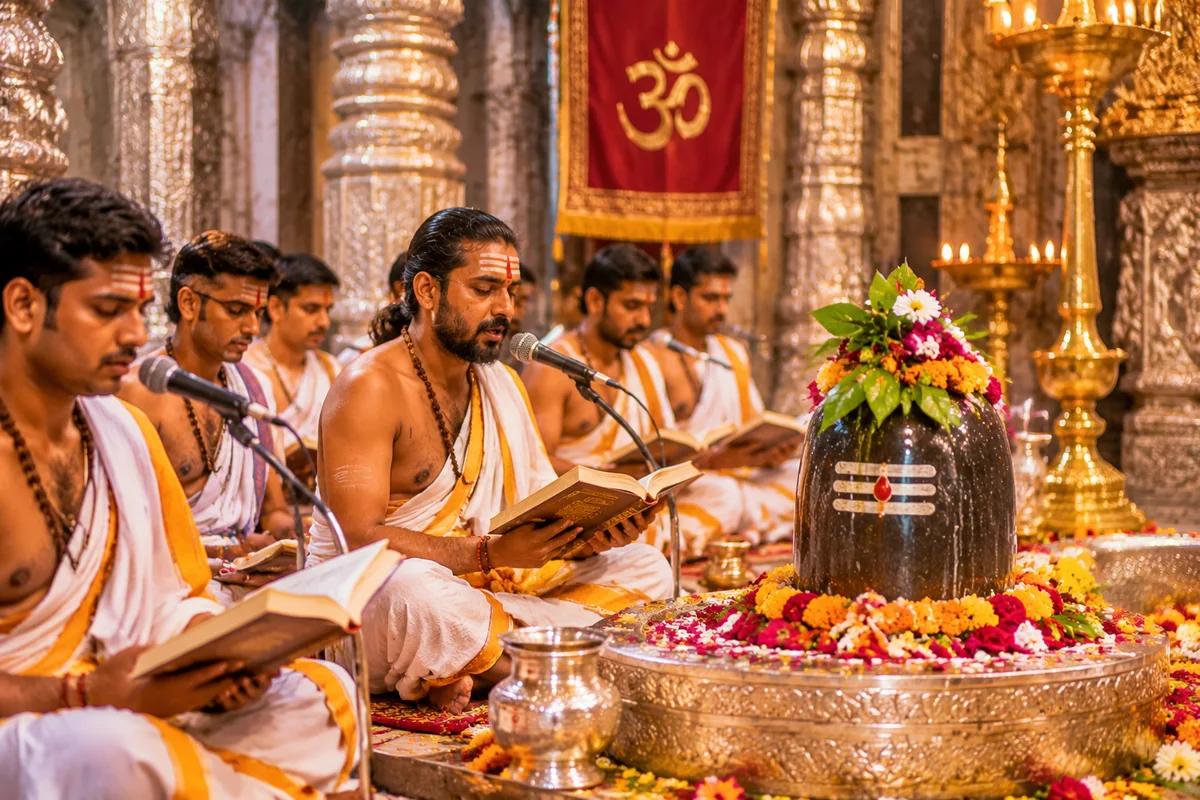
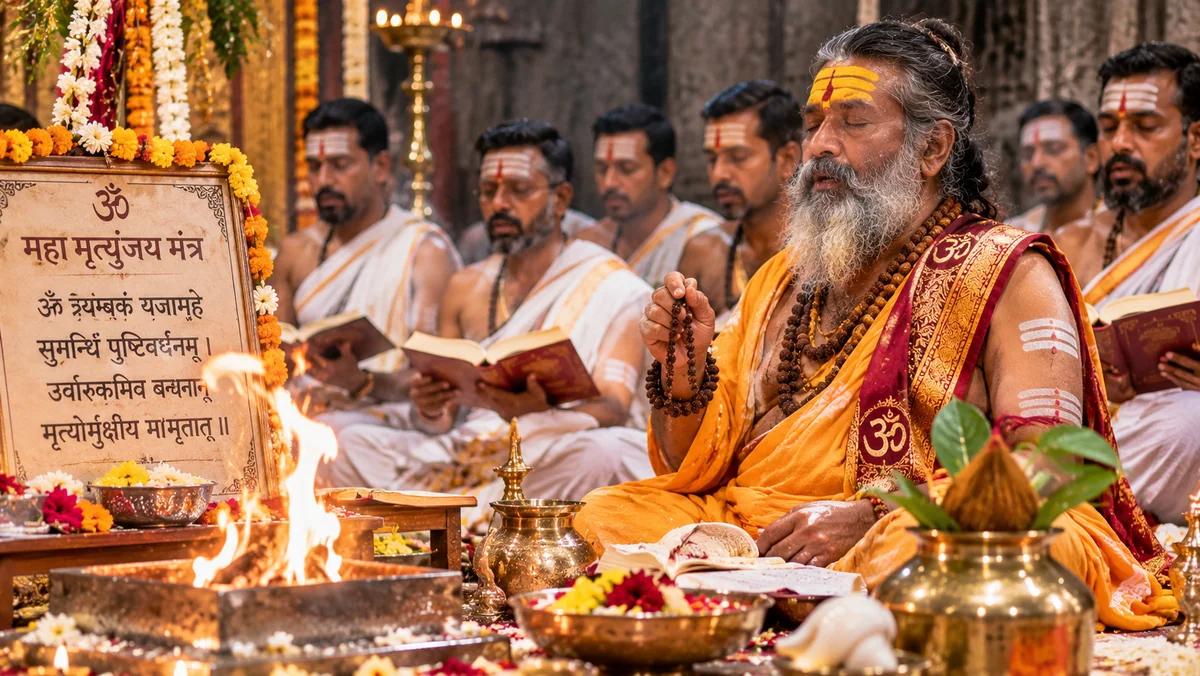
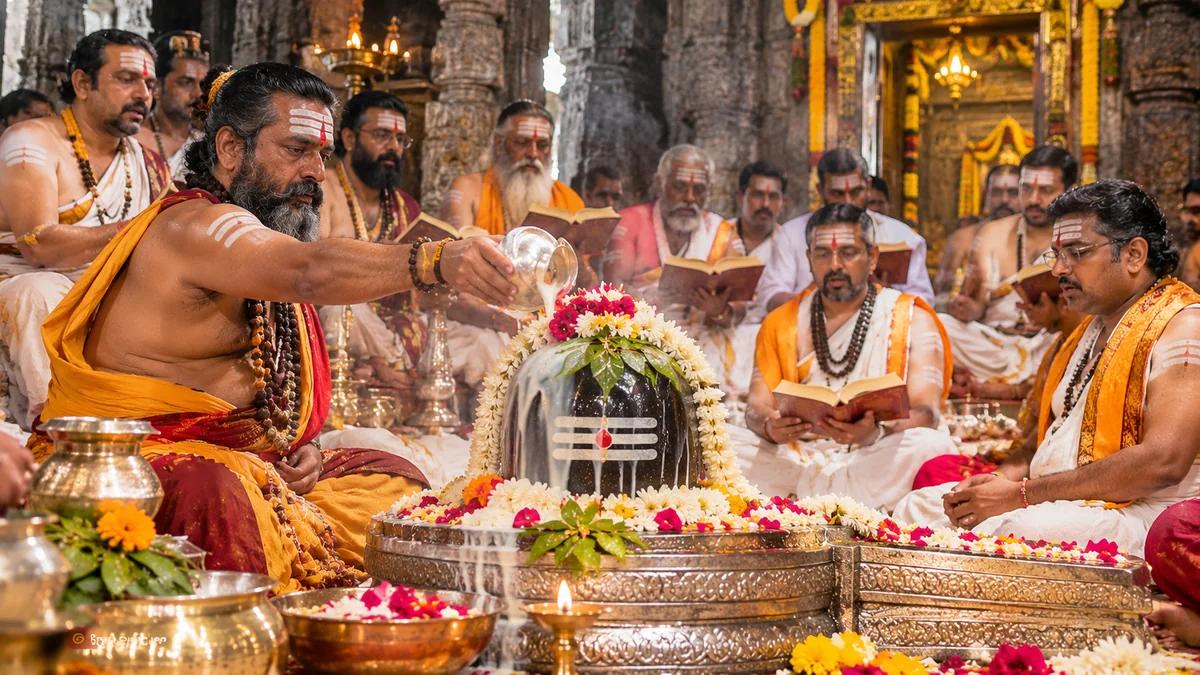
Maha Rudrabhishek represents the supreme pinnacle of Agamic Shiva liturgy. Comprising 1,331 cumulative recitations of Sri Rudram (equivalent to 11 Laghu Rudras or 121 Ekadashanis), this massive anushthan is conducted by an expansive assembly of 21 to 33 highly credentialed Vedic scholars simultaneously chanting the sacred verses of Shukla Yajurveda. Held within the sacred perimeter of Mahakaleshwar, it is performed for universal welfare, spiritual liberation, and dissolving severe generational karmic blocks.
Shri Mahakaleshwar Temple Ujjain, Madhya Pradesh
₹15,000*
4–6 Hours
Online (Temple Portal)
Puja Overview
Maha Rudrabhishek represents the supreme pinnacle of Agamic Shiva liturgy. Comprising 1,331 cumulative recitations of Sri Rudram (equivalent to 11 Laghu Rudras or 121 Ekadashanis), this massive anushthan is conducted by an expansive assembly of 21 to 33 highly credentialed Vedic scholars simultaneously chanting the sacred verses of Shukla Yajurveda. Held within the sacred perimeter of Mahakaleshwar, it is performed for universal welfare, spiritual liberation, and dissolving severe generational karmic blocks.
Vedic Abhishek
Peace, Health & Well-being
All days (Subject to availability)
Temple-appointed Priests
Meaning & Significance
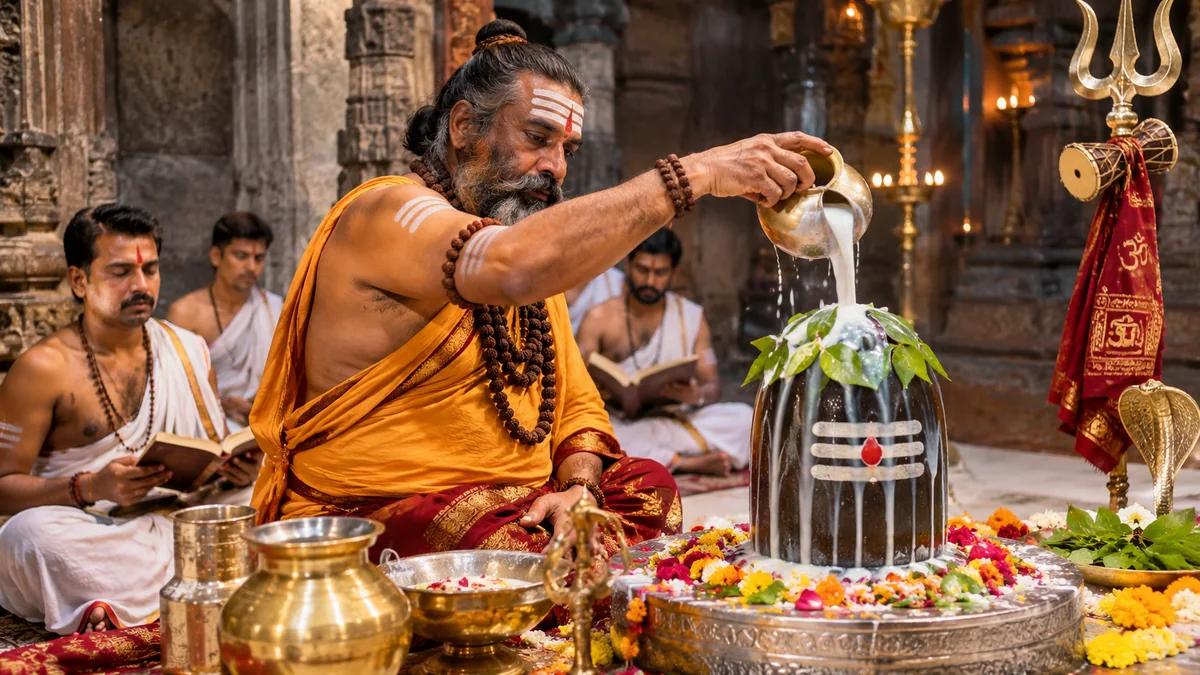
The word "Rudra" refers to a powerful form of Lord Shiva, and "Abhishek" means a sacred bathing ritual. Rudrabhishek is described in Vedic texts as a highly purifying and auspicious worship that helps in cleansing past negativities and inviting Shiva's blessings for protection, stability and harmony in life.
- Pinnacle Vedic Liturgy: 1,331 recitations generate immense spiritual merit referenced in the Shiva Purana and Vayu Purana.
- Grand Scale: Largest authorized ceremony conducted within the Mahakaleshwar temple complex.
- Multi-Priest Synchrony: Simultaneous recitation creates an awe-inspiring acoustic sanctification.

Maha Rudra Liturgical Framework
Maha Varanam & Rig-Yajur Shanti Path
30 MinsGrand ceremonial appointment of 21+ Acharyas with vastram, gandha, and dakshina sankalp, followed by Vedic Shanti invocations.
Sarvatobhadra Mandala & Rudra Kalash Sthapana
45 MinsConstructing the sacred Sarvatobhadra diagram and establishing consecrated copper kalashas with sacred herbs.
1,331 Namakam-Chamakam Recitations
180 MinsContinuous collective chanting of Sri Rudram across multiple sessions while maintaining uninterrupted abhishek jaldhara on the Shivling.
Maha Nyasa, Bhasma & Sahasraksha Shringar
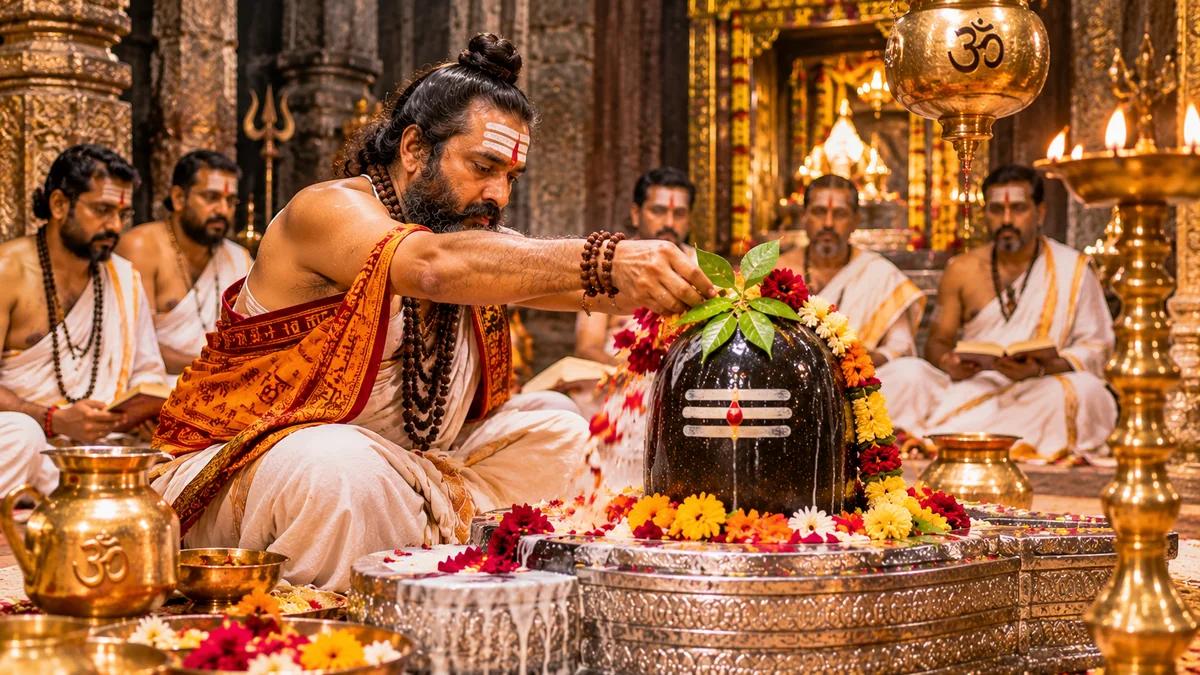
45 MinsDeep energetic nyasa mantras, sacred Mahakal bhasma offering, 2,100 inscribed bilva leaves, and fragrant floral adornment.
Purnahuti, Maha Aarti & Brahmin Santarpana
45 MinsFinal oblations into the consecrated fire, grand Karpura Maha Aarti, blessings to the devotee family, and honoring the assembly of priests.
Samagri (Puja सामग्री)
- •Comprehensive ceremonial samagri for 1,331 recitations
- •25+ Litres pure cow milk, curd, honey, ghee, sugarcane juice
- •2,100 Fresh inscribed Bilva patras
- •Sarvatobhadra mandala colors, dry fruits, and havan dravyas
- •Complete sets of clothes and vastrams for 21+ Vedic Acharyas
- •Official administrative permit from SMTMC (₹15,000 receipt)
- •Photo identification documents for all participating family members
- •Pure silk or traditional attire
Booking Process & Official Fees
STEP-BY-STEP BOOKING PROCEDURE
The ₹15,000 official fee is payable exclusively to the temple committee. The assembly of 21+ scholars is traditionally honored with vastram and voluntary dakshina according to family capacity.
Benefits of the Puja
Scriptures extol the heartfelt recitation and abhishek of Lord Shiva for calming inner turbulence, fostering familial harmony, and dissolving subtle psychological blockages. In accordance with ethical pilgrimage standards, we present these benefits as sacred devotional disciplines, without superstitious outcome guarantees.
Mental Serenity
Recitation of Rudra hymns calms chronic stress, fear, and psychological unease.
Planetary Pacification
Vedic pacification harmonizes afflictions associated with Mangal, Rahu-Ketu, or Pitru lineages.
Important Guidelines & Rules
Devotees must wear traditional unstitched silk or pure cotton Dhoti/Sola (men) or Saree (women)
Formal protocol entry via Gate No. 4. Devotees are met by temple protocol officers and escorted to the consecrated seating.
- ✕Commercial videography and unauthorized streaming strictly prohibited.
- ✕No electronic devices permitted in the sanctum area.